
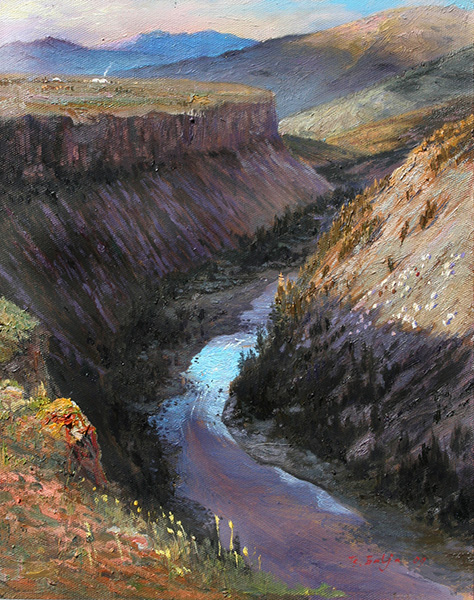
Chuluutiin Gol

Batjargal Tseintsogzol , 2009 , Oil On Canvas

Chuluutiin Gol is a masterful example of Photorealism and Realism, capturing the rugged, untouched beauty of the Chuluut River in Mongolia. Painted in 2009, this oil-on-canvas work measures 45 x 35 cm, a modest scale that invites the viewer into an intimate, high-definition encounter with the Mongolian wilderness.

Visual Composition and Style

The painting focuses on the Chuluut River (Chuluutiin Gol), known for its dramatic basalt canyons and crystal-clear waters. Tseintsogzol employs a meticulous technique that blurs the line between photography and fine art:

  • Water and Reflection: The artist demonstrates an extraordinary command of light and liquid. The river’s surface is rendered with precise ripples and glassy reflections, revealing the depth of the water and the rocky bed beneath.

  • Geological Detail: The “Chuluut” (meaning “stony”) nature of the river is emphasized through the hyper-realistic rendering of the surrounding cliffs and river stones. Every crevice, moss patch, and mineral vein in the basalt is articulated with anatomical accuracy.

  • Atmospheric Light: Typical of Tseintsogzol’s style, the lighting is naturalistic, suggesting a crisp, clear day in the Mongolian highlands. The interplay of shadows within the canyon depth adds a three-dimensional quality that pulls the viewer’s eye into the distance.

The Artist’s Perspective

Born in Ulaanbaatar, Batjargal Tseintsogzol was a central figure in contemporary Mongolian realism. His work often served as a silent tribute to the vastness and ecological purity of his homeland.

“His paintings are not merely copies of nature; they are meditations on the permanence of the Mongolian landscape in an era of rapid change.”

By choosing the Chuluut River as his subject, Tseintsogzol highlights a site of significant geological history—the river flows through a valley formed by ancient volcanic activity. The 2009 piece reflects his peak period, where his ability to balance technical precision with the soulful stillness of nature was most evident.

  • Batjargal Tseintsogzol
  • Nature, Realism, Still Life, Surrealism
  • Oil On Canvas
  • BTJ8/102
  • 45 x 35cm
  • Mongolian Art Gallery

Add Your Comment

Mongolian Art Gallery © 2025. All Rights Reserved
Privacy Policy / Terms of Use

Chuluutiin Gol is a masterful example of Photorealism and Realism, capturing the rugged, untouched beauty of the Chuluut River in Mongolia. Painted in 2009, this oil-on-canvas work measures 45 x 35 cm, a modest scale that invites the viewer into an intimate, high-definition encounter with the Mongolian wilderness.

Visual Composition and Style

The painting focuses on the Chuluut River (Chuluutiin Gol), known for its dramatic basalt canyons and crystal-clear waters. Tseintsogzol employs a meticulous technique that blurs the line between photography and fine art:

  • Water and Reflection: The artist demonstrates an extraordinary command of light and liquid. The river’s surface is rendered with precise ripples and glassy reflections, revealing the depth of the water and the rocky bed beneath.

  • Geological Detail: The “Chuluut” (meaning “stony”) nature of the river is emphasized through the hyper-realistic rendering of the surrounding cliffs and river stones. Every crevice, moss patch, and mineral vein in the basalt is articulated with anatomical accuracy.

  • Atmospheric Light: Typical of Tseintsogzol’s style, the lighting is naturalistic, suggesting a crisp, clear day in the Mongolian highlands. The interplay of shadows within the canyon depth adds a three-dimensional quality that pulls the viewer’s eye into the distance.

The Artist’s Perspective

Born in Ulaanbaatar, Batjargal Tseintsogzol was a central figure in contemporary Mongolian realism. His work often served as a silent tribute to the vastness and ecological purity of his homeland.

“His paintings are not merely copies of nature; they are meditations on the permanence of the Mongolian landscape in an era of rapid change.”

By choosing the Chuluut River as his subject, Tseintsogzol highlights a site of significant geological history—the river flows through a valley formed by ancient volcanic activity. The 2009 piece reflects his peak period, where his ability to balance technical precision with the soulful stillness of nature was most evident.