
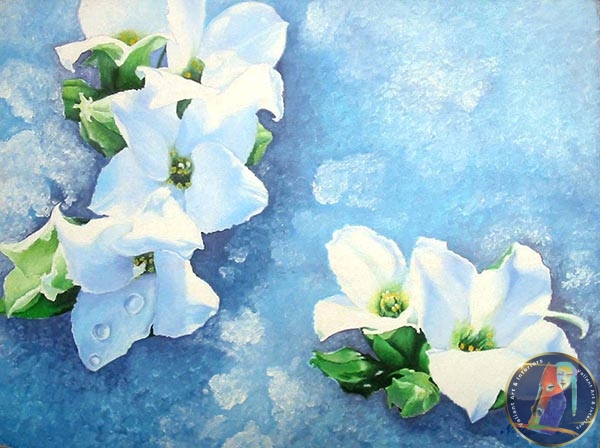
Chimee (a Mongolian word translating to “silence,” “quiet,” or “soundlessness”) is a compelling contemporary oil painting that masterfully synthesizes traditional Mongolian themes with a refined, modern aesthetic. The expansive horizontal canvas ($110 \times 140 \text{ cm}$) mimics the boundless, open geography of the Mongolian steppe, utilizing a vast sense of scale to envelop the viewer in an atmosphere of profound stillness.
The painting features Natsagdorj’s signature approach to space and human form, heavily influenced by her multicultural training spanning Mongolia, scenic painting in Ukraine, and traditional sensibilities cultivated during her studies in Kyoto, Japan.
The Central Figure: At the heart of the composition is a stylized figure, often representative of a Mongolian woman, depicted in a state of quiet contemplation or deep repose. The figure’s posture is elegant and elongated, showing an economy of line that mirrors East Asian minimalist art principles while retaining the heavy, dramatic spatial presence required of scenic backdrops.
The Steppe Motif: The figure is seamlessly integrated into a stylized, sweeping landscape. Rather than a purely photographic representation, the vast Mongolian plains are rendered through soft, rolling planes and meditative horizons, emphasizing the symbiotic relationship between nomadic people and their quiet, infinite surroundings.
Color Palette and Texture
Natsagdorj utilizes a rich, deeply evocative color palette that leans into subtle contrasts to convey the concept of “Chimee”:
Earth and Sky Tones: The background shifts gracefully between muted earth tones—warm ochres, soft terracotta, and deep umber—juxtaposed against cool, expansive washes of slate blue, pale gray, or twilight indigo. This dualism emphasizes the transition of time on the open steppe, where silence becomes tactile.
Tactile Brushwork: The oil paint is applied with an expert balance of smooth, layered glazes and sudden, expressive impasto texture. The smooth passages echo the uninterrupted stillness of a quiet landscape, while the thicker, textured brushstrokes give a tangible weight to the clothing fabrics and the rugged terrain.
Style and Art Historical Significance
Chimee stands out as a bridge between late-20th-century Mongolian modernism and international contemporary art. By stripping away busy, narrative-driven elements, Natsagdorj invites a minimalist focus on form, negative space, and emotional resonance.
The piece beautifully reflects the artist’s identity as a pioneering female freelance artist emerging from the post-1990 democratic transition in Mongolia. Free from the constraints of socialist realism, the artwork embraces a deeply personal, philosophical interiority. It captures the psychological weight of isolation and serenity, elevating the cultural memory of the Mongolian landscape into a universal language of meditation and peace.