
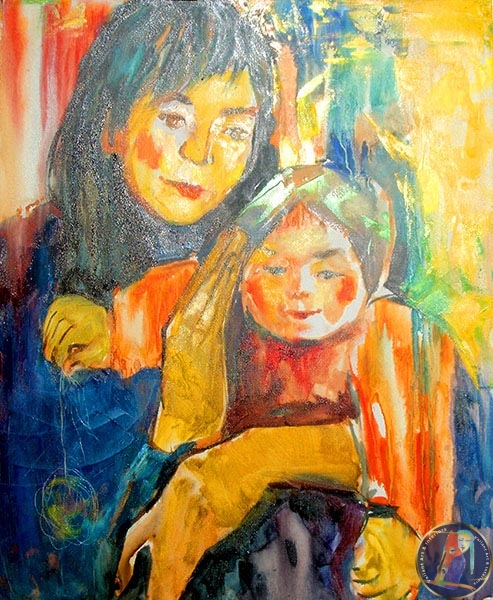
Bugeen Setgel is a compelling oil on canvas masterwork by contemporary Mongolian artist Sainkhuu Enkhbat. Measuring 40 by 50 cm, this mid-sized composition brilliantly bridges the gap between traditional nomadic heritage and modern expressive realism, a hallmark of Enkhbat’s celebrated style.
The painting’s title, Bugeen Setgel (which translates from Mongolian to mean “The Shaman’s Soul” or “The Shamanic Mind”), provides a vital thematic anchor. The canvas is alive with a profound sense of spiritual movement and dynamic texture. Enkhbat utilizes bold, confident palette knife strokes alongside fluid brushwork to create a rich, tactile surface that seems to pulse with unseen energy.
Central to the composition is a deeply evocative portrayal of Mongolia’s spiritual landscape. The imagery subtly weaves together the ethereal silhouette of a shamanic figure with the powerful, fluid forms of horses—a recurring motif in Enkhbat’s oeuvre that reflects his deep-rooted cultural identity. The horses are not merely physical beasts but are rendered as spiritual extensions of the mind, leaping through a hazy, atmospheric background that evokes the vastness of the Mongolian steppe under a mystical sky.
The color palette is both earthy and transcendent. Deep, grounding tones of sienna, ochre, and midnight blue dominate the canvas, punctuated by sudden, vibrant flashes of crimson and ethereal white. These bright bursts of color mimic the flickering light of a ceremonial fire or the sudden flash of spiritual enlightenment. Enkhbat’s masterful manipulation of light and shadow creates a chiaroscuro effect, drawing the viewer’s eye into the central swirl of the ritualistic dance.
Bugeen Setgel stands as a profound exploration of connection—between humanity and nature, the physical world and the spirit realm. Its inclusion in prestigious international exhibitions, such as the 2010 “Art Shopping” at the Carrousel Du Louvre in Paris and the 2010 “International Equestrian Festival” in Lexington, Kentucky, underscores its universal appeal and its importance in the global dialogue of contemporary Central Asian art.