

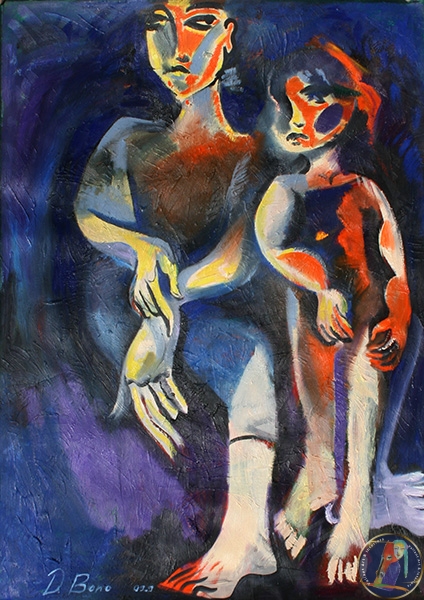
Brotherhood is a commanding oil painting that exemplifies Ganbold’s mastery of modern figurative abstraction. Set against a large-scale vertical canvas, the work explores the profound psychological and physical bonds between male figures. The composition balances the raw vulnerability of the nude form with a sophisticated, contemporary aesthetic, utilizing a palette and texture that bridge the gap between traditional Mongolian sensibilities and international modernism.
Composition and Style
The painting features a central grouping of figures whose forms are rendered with a blend of anatomical precision and abstract fluidity. Ganbold employs a distinct figurative style where the bodies seem to emerge from and recede into a textured background, suggesting a shared essence or a unified spirit—the literal “brotherhood.”
Dynamic Interaction: The figures are positioned in a way that emphasizes physical proximity and mutual support. Their limbs and torsos overlap, creating a rhythmic flow of lines that draws the viewer’s eye through the internal architecture of the group.
Abstract Elements: While the figures are clearly human, Ganbold strips away specific environmental details, focusing instead on the emotional weight of the subjects. The use of bold, expressive brushwork and perhaps a muted or earthy tonal range reflects the artist’s “Aphorizm in art” philosophy—saying more with less.
Technique and Materiality
The use of Oil on Canvas allows for a rich layering of pigment, providing the skin tones with a luminous, visceral quality.
Texture: The surface likely bears the marks of a confident hand, with impasto techniques used to highlight the musculature and tension within the figures.
Scale: At 140 x 100 cm, the painting possesses a life-sized presence. This scale forces an intimate confrontation between the viewer and the subjects, amplifying the themes of “Freedom” and collective identity that have defined Ganbold’s career since his early exhibitions in Beijing and Shanghai.
Thematic Significance
Reflecting the artist’s evolution from his 2006 “Great Mongolia 800” period to his more introspective solo works, Brotherhood serves as a meditation on human connection. It eschews cultural clichés in favor of a universal language of form. The nudity serves not as a provocation, but as a symbol of truth and the shedding of social hierarchies, presenting the “brotherhood” in its most primal, honest state.
