Black And White

Chimeddorj Shagdarjav , 2009 , Ink On Paper

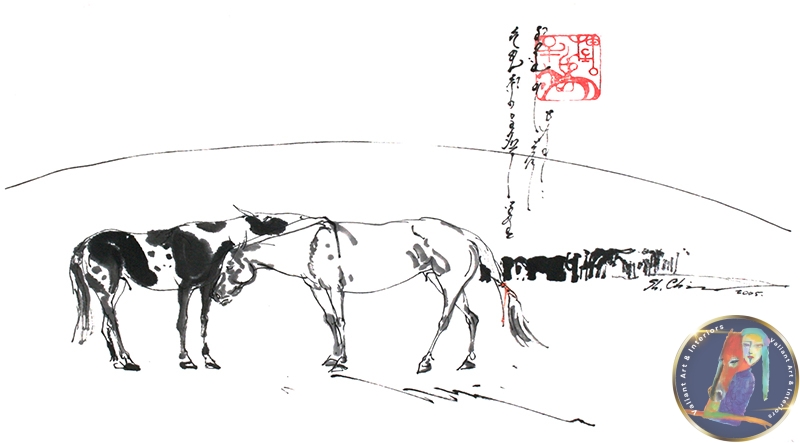
Black and White is a compelling exploration of ink wash and linework, reflecting Chimeddorj Shagdarjav’s mastery of the medium. The composition is characterized by a stark, high-contrast aesthetic that bridges the gap between traditional Mongolian aesthetics and modern geometric abstraction.

Composition and Form

The painting utilizes the horizontal orientation of the paper to create a sense of expansive space. The artist employs a “less is more” approach, using bold, black ink against the natural white of the paper. The forms are primarily linear and structural, suggesting a landscape or architectural silhouette that has been distilled into its most basic geometric essence. Sharp angles intersect with softer, fluid ink washes, creating a visual tension between rigid control and organic spontaneity.

Style and Technique

Reflecting Shagdarjav’s background in both sculpture and contemporary painting, the work possesses a distinct three-dimensional quality. The ink varies in intensity from deep, opaque blacks to faint, translucent grays. This tonal range provides a sense of depth, suggesting layers of distance or light hitting a jagged surface.

  • Geometric Modernism: The use of precise lines and shapes points to a modern, analytical view of the subject matter.

  • Minimalist Landscape: While abstract, the rhythm of the brushstrokes evokes the rugged terrain of the Mongolian steppe or the silhouettes of mountain ranges under a stark light.


Contextual Significance

As a graduate of the State Pedagogical Institute in Ulaanbaatar, Chimeddorj Shagdarjav is a pivotal figure in Mongolian contemporary art. This piece represents his departure from strict socialist realism toward a more personal, abstracted language.

In Black and White, Shagdarjav discards color to focus entirely on rhythm, balance, and the physical properties of ink. The result is a work that feels both ancient—reminiscent of traditional calligraphy—and strikingly avant-garde, capturing the silent, powerful energy of the Mongolian landscape through a minimalist lens.
  • Chimeddorj Shagdarjav
  • Ulaanbaatar, Mongolia
  • Abstract, Geometric, Landscape, Modern/Contemporary, Sculpture
  • Ink On Paper
  • CHD18/009-07
  • 28 x 55cm10" x 21"
  • Valiant Art & Interiors

Add Your Comment

Mongolian Art Gallery © 2025. All Rights Reserved
Privacy Policy / Terms of Use

Black and White is a compelling exploration of ink wash and linework, reflecting Chimeddorj Shagdarjav’s mastery of the medium. The composition is characterized by a stark, high-contrast aesthetic that bridges the gap between traditional Mongolian aesthetics and modern geometric abstraction.

Composition and Form

The painting utilizes the horizontal orientation of the paper to create a sense of expansive space. The artist employs a “less is more” approach, using bold, black ink against the natural white of the paper. The forms are primarily linear and structural, suggesting a landscape or architectural silhouette that has been distilled into its most basic geometric essence. Sharp angles intersect with softer, fluid ink washes, creating a visual tension between rigid control and organic spontaneity.

Style and Technique

Reflecting Shagdarjav’s background in both sculpture and contemporary painting, the work possesses a distinct three-dimensional quality. The ink varies in intensity from deep, opaque blacks to faint, translucent grays. This tonal range provides a sense of depth, suggesting layers of distance or light hitting a jagged surface.

  • Geometric Modernism: The use of precise lines and shapes points to a modern, analytical view of the subject matter.

  • Minimalist Landscape: While abstract, the rhythm of the brushstrokes evokes the rugged terrain of the Mongolian steppe or the silhouettes of mountain ranges under a stark light.


Contextual Significance

As a graduate of the State Pedagogical Institute in Ulaanbaatar, Chimeddorj Shagdarjav is a pivotal figure in Mongolian contemporary art. This piece represents his departure from strict socialist realism toward a more personal, abstracted language.

In Black and White, Shagdarjav discards color to focus entirely on rhythm, balance, and the physical properties of ink. The result is a work that feels both ancient—reminiscent of traditional calligraphy—and strikingly avant-garde, capturing the silent, powerful energy of the Mongolian landscape through a minimalist lens.