
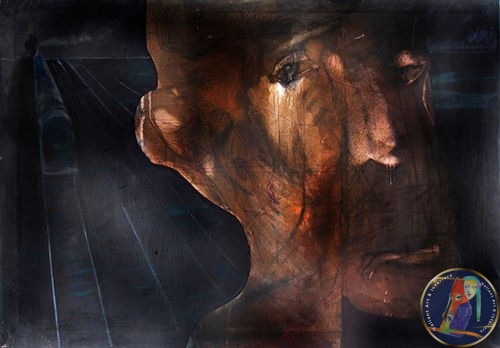
Bid (which translates from Mongolian to “We”) is a pivotal work created during a highly prolific year for Odgerel Tsulbaatar. Painted in 2006—the same year the artist participated in four major exhibitions including “Great Mongol 800″—the piece serves as a bridge between traditional Mongolian identity and the bold, experimental strokes of Contemporary Figurative art.
Composition and Style
The painting is a masterclass in Contemporary Figurative style, leaning heavily into the Abstract and Modern influences that define Tsulbaatar’s education at the Fine Art University in Ulaanbaatar.
The Subject: The title “We” suggests a collective identity. The figures within the frame are rendered with a blend of anatomical suggestion and abstract distortion. Rather than hyper-realistic portraits, Tsulbaatar uses the human form to explore psychological depth and communal connection.
Color Palette: Utilizing the rich, blending capabilities of oil paint, the artist employs a palette that often mirrors the earthy yet vibrant tones of the Mongolian landscape—deep ochres, weathered blues, and striking crimsons.
Brushwork: The application is emotive and textured. There is a palpable energy in the canvas where the background and foreground often bleed into one another, suggesting that the “We” of the title are inseparable from their environment or their history.
Thematic Significance
Created during the 800th anniversary of the Great Mongol Empire, Bid moves away from the literalism of historical painting. Instead, it captures the “Real Feel”—referencing the artist’s 2006 solo exhibition theme. It explores what it means to be Mongolian in a modern, globalized world. The 73 x 103 cm horizontal orientation provides a cinematic scope, allowing the viewer to feel like an observer of a private, enduring moment of human solidarity.