
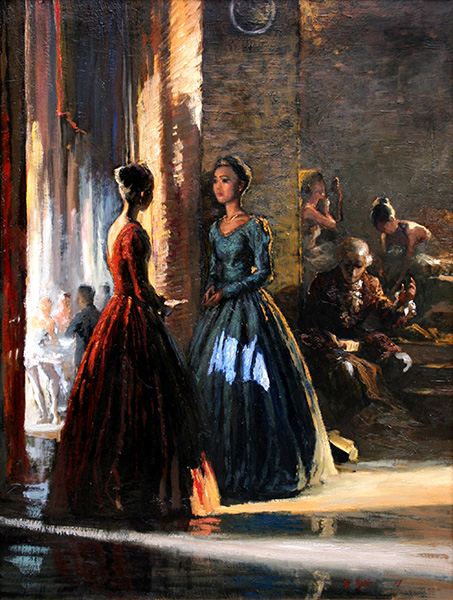
Behind The Stage

Batjargal Tseintsogzol , 2008 , Oil On Canvas

The painting centers on a single figure—likely a dancer or performer—caught in a moment of focused preparation. The artist employs a tight, cinematic crop that emphasizes the tactile textures of the performer’s attire.

  • The Lighting: Tseintsogzol utilizes a dramatic chiaroscuro effect. Light spills from an unseen source (perhaps a dressing room mirror or a doorway), catching the intricate gold embroidery and the sheen of the silk fabrics while leaving the background in a soft, atmospheric gloom.

  • The Subject: Rather than a wide shot of a theater, the focus is on the sensory details: the weight of the traditional headpiece, the deliberate movement of the hands, and the stillness of the “liminal space” behind the curtain.

Artistic Style: Photorealism & Realism

Reflecting his background in Ulaanbaatar and his mastery of Western realistic techniques, Tseintsogzol treats every inch of the 60 x 80 cm canvas with exacting detail.

  • Materiality: The viewer can almost feel the difference between the heavy velvet, the stiff metallic thread of the patterns, and the soft skin of the subject. This is a hallmark of his nature-oriented realism, where the “nature” being captured is the physical reality of the human world.

  • The Palette: The work is dominated by rich, earthen tones—deep reds, burnished golds, and warm shadows—which evoke a sense of timelessness and cultural pride.

Cultural Context

As a Mongolian artist, Tseintsogzol’s work often serves as a silent guardian of heritage. Behind The Stage is not just a portrait; it is an exploration of identity.

  • The elaborate costume suggests a connection to Mongolian folk dance or opera.

  • By choosing to paint the “behind the scenes” moment rather than the performance itself, the artist highlights the discipline and dignity inherent in Mongolian craftsmanship and artistry.

Summary of the Work

In Behind The Stage, Batjargal Tseintsogzol transcends simple documentation. He invites the viewer into a sanctuary of preparation, turning a routine moment into a profound meditation on beauty, tradition, and the quiet intensity of the artist’s soul.

“His work doesn’t just show you what a thing looks like; it shows you how the light feels when it touches it.”
  • Batjargal Tseintsogzol
  • Minimalist, Mongolian Style, Sculpture
  • Oil On Canvas
  • BTJ8/098
  • 60 x 80cm

Add Your Comment

Mongolian Art Gallery © 2025. All Rights Reserved
Privacy Policy / Terms of Use

The painting centers on a single figure—likely a dancer or performer—caught in a moment of focused preparation. The artist employs a tight, cinematic crop that emphasizes the tactile textures of the performer’s attire.

  • The Lighting: Tseintsogzol utilizes a dramatic chiaroscuro effect. Light spills from an unseen source (perhaps a dressing room mirror or a doorway), catching the intricate gold embroidery and the sheen of the silk fabrics while leaving the background in a soft, atmospheric gloom.

  • The Subject: Rather than a wide shot of a theater, the focus is on the sensory details: the weight of the traditional headpiece, the deliberate movement of the hands, and the stillness of the “liminal space” behind the curtain.

Artistic Style: Photorealism & Realism

Reflecting his background in Ulaanbaatar and his mastery of Western realistic techniques, Tseintsogzol treats every inch of the 60 x 80 cm canvas with exacting detail.

  • Materiality: The viewer can almost feel the difference between the heavy velvet, the stiff metallic thread of the patterns, and the soft skin of the subject. This is a hallmark of his nature-oriented realism, where the “nature” being captured is the physical reality of the human world.

  • The Palette: The work is dominated by rich, earthen tones—deep reds, burnished golds, and warm shadows—which evoke a sense of timelessness and cultural pride.

Cultural Context

As a Mongolian artist, Tseintsogzol’s work often serves as a silent guardian of heritage. Behind The Stage is not just a portrait; it is an exploration of identity.

  • The elaborate costume suggests a connection to Mongolian folk dance or opera.

  • By choosing to paint the “behind the scenes” moment rather than the performance itself, the artist highlights the discipline and dignity inherent in Mongolian craftsmanship and artistry.

Summary of the Work

In Behind The Stage, Batjargal Tseintsogzol transcends simple documentation. He invites the viewer into a sanctuary of preparation, turning a routine moment into a profound meditation on beauty, tradition, and the quiet intensity of the artist’s soul.

“His work doesn’t just show you what a thing looks like; it shows you how the light feels when it touches it.”