
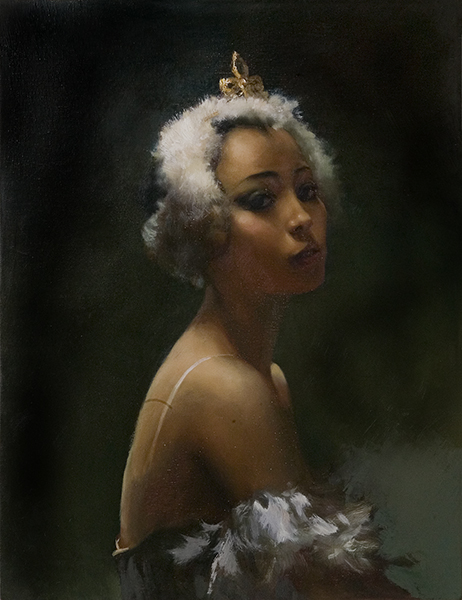
Ballerino is a compelling testament to Batjargal Tseintsogzol’s mastery of Photorealism and his ability to find profound stillness within a single moment. Painted in 2008, this oil on canvas measures 70 x 50 cm, offering an intimate yet powerful glimpse into the physical and emotional discipline of dance.
Visual Composition and Style
True to Tseintsogzol’s reputation for technical precision, the painting is executed with such meticulous detail that it initially mimics the clarity of a high-resolution photograph. The artist employs a Realist approach to texture, capturing the subtle interplay of light on fabric and skin.
The Subject: The focus is on a male dancer (a ballerino), captured in a moment of poised athleticism. Unlike traditional stage portraits, this work emphasizes the human form as a vessel of strength and grace.
Light and Shadow: Tseintsogzol utilizes a sophisticated grasp of chiaroscuro, using light to define the musculature and the intricate folds of the dancer’s attire. This contrast creates a three-dimensional depth that makes the figure seem to emerge from the canvas.
Nature and Atmosphere: While the artist is known for his landscapes, Ballerino reflects his “Nature” style through the organic, fluid movement of the body. There is a raw, naturalistic honesty in how the physical exertion is portrayed.
Cultural Context
Coming from Ulaanbaatar, Tseintsogzol was a pivotal figure in contemporary Mongolian art. Ballerino represents a bridge between Western classical traditions (ballet) and a Mongolian aesthetic focused on stoicism and meticulous craftsmanship. The painting doesn’t just show a dance; it captures the “inner nature” of the performer—the quiet intensity and the discipline required to make effort look effortless.
“His work is characterized by a silent power; he doesn’t just paint what he sees, but the weight and atmosphere of the air surrounding the subject.”