
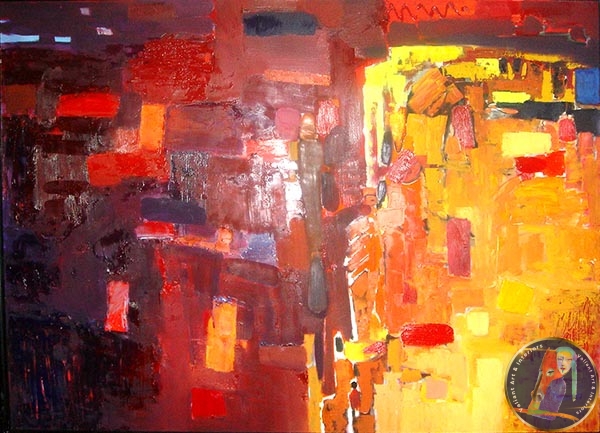
Balero is a compelling horizontal oil painting that masterfully synthesizes traditional Mongolian cultural identity with early-20th-century modernist aesthetics. The piece features a stylized figurative arrangement, focusing heavily on female figures, which is a recurring focal point in Uranchimeg Sodnom’s broader body of work.
The composition is structured with a rhythmic, dynamic layout that captures a sense of movement—evoking the spirit of the Bolero dance implied by the title, while remaining anchored in nomadic visual traditions. Rather than a literal, photo-realistic depiction, the figures are rendered using sweeping, elongated lines and semi-abstracted geometries that blur the line between traditional realism and contemporary graphic expression.
Color Palette and Texture
The canvas utilizes a rich, deeply saturated color palette that balances warm and cool tones:
Dominant Tones: Earthy ochres, deep terracottas, and vibrant crimsons dominate the figures, paying homage to the traditional colors found in Mongolian nomadic attire and regional textiles.
Contrasting Accents: Striking flashes of deep blues, turquoise, or muted teals weave through the composition, creating dramatic contrast and guiding the viewer’s eye across the canvas.
Textural Execution: The oil paint is applied with deliberate, visible brushwork. Smooth, flat fields of color are juxtaposed with areas of shorter, textural strokes, giving the canvas a tactile, woven quality that feels reminiscent of traditional tapestries or hand-pressed felt.
Form and Style
Sodnom’s formal training at the Fine Art University of Mongolia is evident in her strong grasp of line and anatomy, yet she purposefully distorts these elements for emotional weight. The figures possess exaggerated silhouettes—characterized by elongated necks, sweeping limbs, and elegant, angular postures.
The background is flattened, rejecting traditional western linear perspective in favor of a layered, atmospheric depth. This design choice places the emphasis entirely on the interplay of shapes, negative space, and the expressive silhouettes of the subjects.
Artistic and Contextual Analysis
Curatorial Note: Painted in the early 2000s, Balero stands as a definitive representation of post-socialist Mongolian art. This era allowed artists like Sodnom to break free from the rigid structures of Soviet Socialist Realism and re-explore native cultural themes through global modernist frameworks.
The painting represents a beautiful cultural paradox. The title Balero (a common alternative spelling of “Bolero”) references the famously rhythmic, slow-tempo Spanish dance. Sodnom utilizes this concept of hypnotic, repetitive movement and transposes it into a Mongolian context. The fluid motion of the figures mirrors the cadence of traditional Mongolian scenic dances and the swaying posture of horseback riding, blending international avant-garde influences with the profound stillness of the Mongolian steppe.
As a prominent female voice in the Union of Mongolian Artists, Sodnom uses Balero to project a sense of modern, resilient feminine identity—one that honors historical lineage while claiming a space in the contemporary international art dialogue.