
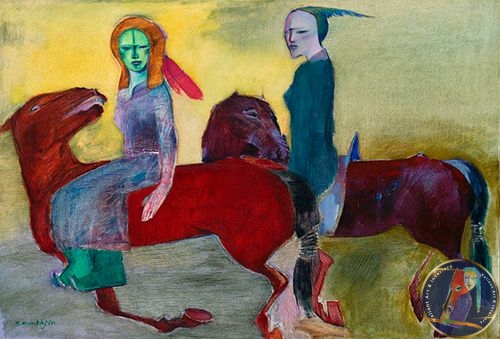
In this expansive horizontal composition, Munkhjin Tsultem masterfully blends the rugged heritage of Mongolian nomadism with the refined, structured techniques he honed at the Stroganov Institute in Moscow. The painting is a vibrant exploration of color theory and figurative symbolism, centered on the symbiotic relationship between the Mongolian people and the “spirit of the steppe.”
The Central Subject: The Red Horse
Dominating the center of the canvas is a horse rendered in an extraordinary, non-naturalistic palette of deep vermilion and burnt orange.
Form: The horse is depicted with a stylized, almost sculptural solidity, reflecting Tsultem’s background in design and contemporary figurative art.
Symbolism: The choice of red elevates the animal from a mere beast of burden to a symbol of vitality, fire, and the life-force of the Mongolian landscape. Its presence is grounding, acting as the structural anchor for the entire composition.
The Two Women
Flanking or positioned near the horse are two female figures, rendered with a grace that bridges the gap between traditional Mongolian aesthetics and modern European modernism.
Attire: They are typically dressed in stylized versions of the deel (traditional Mongolian tunic), where the fabric is treated as a series of rhythmic planes of color rather than intricate patterns.
Interaction: Their poses suggest a quiet, monumental calm. One woman may be positioned leading the horse or leaning against it, while the other offers a counter-balance in the composition. Their faces often carry the “Stroganov” influence—simplified, elegant features that prioritize emotional resonance over photographic realism.
Composition and Color Palette
The 89 x 130 cm format allows for a wide, cinematic view of the scene, emphasizing the vastness of the Mongolian environment without needing to paint a literal horizon.
The Background: Tsultem often utilizes a “flattened” perspective. The background is likely composed of broad, textured sweeps of oil paint—perhaps ochres, dusty yellows, or cool turquoises—that suggest the plains and sky without distracting from the central figures.
The Brushwork: The application of oil is deliberate and confident. Visible brushstrokes add a tactile quality to the canvas, creating a sense of movement within the stillness of the scene.