

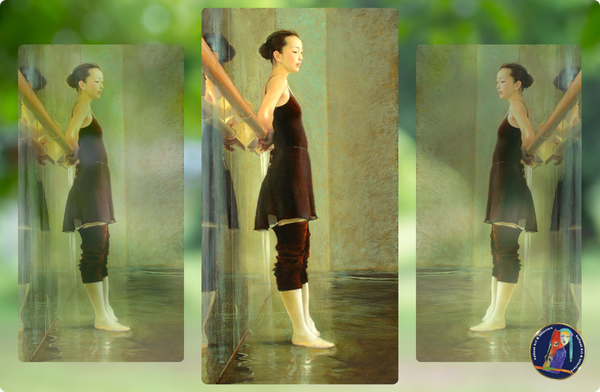
Measuring an intimate 45 by 60 centimeters, Young Ballerino 2 offers a deeply personal and closely cropped look at the physical discipline of a young male ballet dancer. Grounded in Realism and Photorealism, the painting strips away the romanticized glamour of the stage to focus on the raw, athletic reality of the dancer. The composition likely captures a moment of rest or intense rehearsal, drawing the viewer’s eye to the intricate anatomy, the tension in the musculature, and the quiet concentration of the youth.
Technique and Mastery
Executed in oil on canvas, Tseintsogzol utilizes the slow-drying nature of the medium to achieve a striking, photographic clarity. The Photorealist technique is evident in the meticulous rendering of textures: the soft weave of the dancer’s practice garments, the subtle sheen of exertion on the skin, and the precise, anatomical accuracy of the dancer’s posture. The brushwork is virtually invisible, creating a flawless illusion of reality that invites the viewer to look closer.
Thematic Resonance and Nature
The artist’s association with Nature brings a unique thematic layer to a subject usually confined to the indoors. Rather than placing the ballerino in a sterile, artificial studio environment, Tseintsogzol likely grounds the figure in naturalism. This could be achieved through the use of crisp, organic lighting—perhaps the cool, sweeping daylight characteristic of the Mongolian landscape pouring through a window—or by juxtaposing the highly refined, classical art of ballet with earthy, organic tones and textures. This synthesis bridges the gap between structured human discipline and the natural world.