

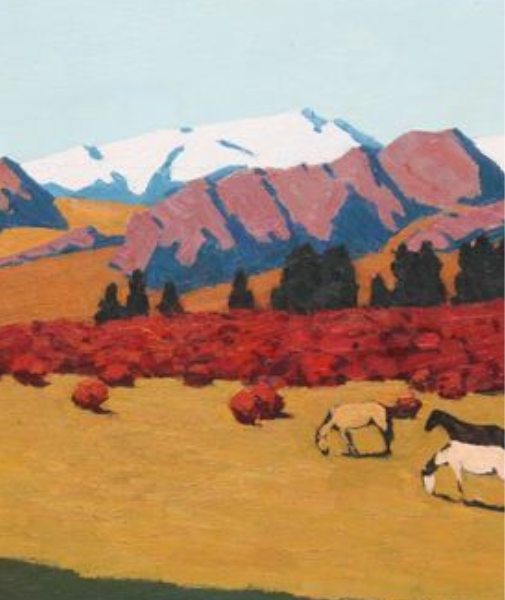
In the viscerally striking and profoundly atmospheric Terelj, Ichinnorov Choijin delivers a high-concept masterclass in capturing the rhythmic soul and primal energy of the Mongolian landscape through a sophisticated, modern lens. Measuring a perfectly balanced and commanding 45.3 x 60.6 cm (17″ x 24″), this 2006 oil on canvas utilizes its substantial scale to create a concentrated, cinematic window into a world of quietude and focused natural grace. The unique selling point of this masterpiece lies in Choijin’s virtuoso “chromatic naturalism”—a sophisticated technical approach where he employs a daringly complex palette and sweeping, energetic brushwork to pull the living, breathing essence of the Terelj Valley directly from the canvas. This technical brilliance ensures the painting reacts dynamically to its environment; as ambient light in a room shifts, the complex layering of oil and subtle tonal transitions create an ever-evolving interplay of shadow and highlights that mimic the flickering energy of nature in a moment of poised strength. By balancing a deeply traditional, iconic subject with a raw, modern expressive sensibility, the artist achieves a rare “monumental intimacy.” For the discerning collector or interior visionary, Terelj is a premium, high-impact acquisition—a sophisticated “intellectual anchor” that brings an aura of cultural prestige, profound soul, and contemporary elegance to a minimalist foyer, a curated gallery wall, or a professional executive suite.
About the Artist
Ichinnorov Choijin (1942–2006) was a venerable figure in the Mongolian art movement, hailing from the cultural heart of Ulaanbaatar. His work is celebrated for its technical precision and a deep affinity for the elemental forces of nature, often bridging the gap between traditional representational art and a modern, atmospheric sensibility. Throughout his distinguished career, Choijin gained international recognition for his ability to capture the dignity and spirit of his subjects through a unique mastery of color and form. His legacy remains a significant cornerstone in the evolution of Central Asian fine art and continues to be highly respected by scholars and collectors worldwide.
