
The USP: A Monumental Mirage of Serenity and Desert Light
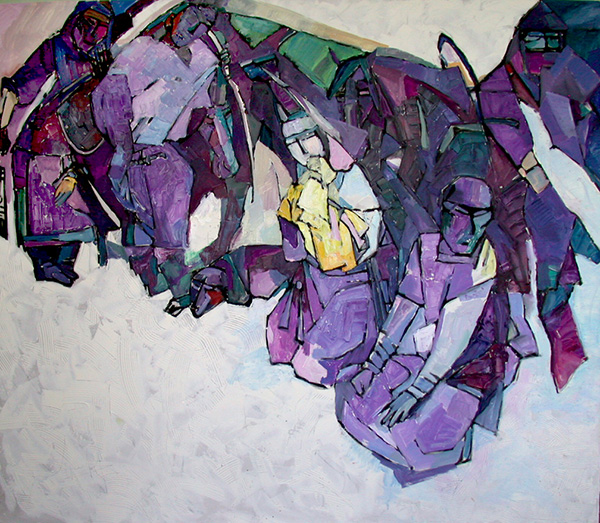
In the breathtaking masterwork Rest On The Desert, Amarsanaa Galmandakh orchestrates a profound narrative of peace on a truly cinematic scale. Measuring a magnificent 130 x 150 cm (51″ x 59″), this 2004 oil on canvas serves as an expansive, immersive window into the quiet intervals of nomadic life, where the vastness of the Mongolian landscape meets a moment of deep repose. The unique selling point of this piece lies in its exceptional “living surface”; utilizing a sophisticated impasto technique, Galmandakh layers rich pigments to create a tactile topography that captures and reflects light with sculptural grace. The composition is a poetic study of atmospheric depth, where bold, sweeping brushstrokes translate the stillness of the air and the immense silence of the desert plateau into a visual rhythm of deep, evocative tones. For the discerning collector, this is a premium statement piece that offers a profound, modern meditation on the enduring relationship between the nomad and the infinite horizon of the heartland.
About the Artist
Born in 1974 in Ulaanbaatar, Amarsanaa Galmandakh is a prominent figure in the contemporary Mongolian art scene, celebrated for his ability to infuse traditional themes with a modern, philosophical sensibility. His work often explores the intersection of man, nature, and the internal journey, characterized by a refined technical versatility across both oil and watercolor. Galmandakh’s paintings are highly regarded by international collectors for their emotional resonance and their unique capacity to capture both the poetic silence of the landscape and the evolving identity of the Central Asian people.