
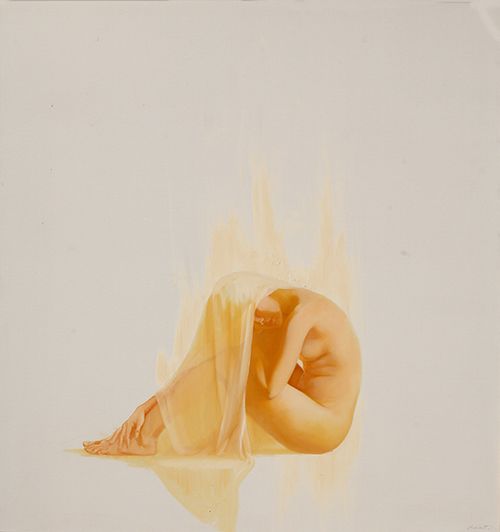
Nostalgia

Erdene Dash , 2004 , Oil On Canvas

1. The Central Figure

At the heart of the composition is a solitary nude figure, rendered with the anatomical precision characteristic of Dash’s classical training. The figure is not merely a subject of study but an embodiment of vulnerability and reflection.

  • Pose: The figure is captured in a moment of quiet repose, perhaps seated or reclining against the natural terrain. The posture is introspective—shoulders slightly curved or head tilted—evoking a sense of yearning or “nostalgia” for a place or time just out of reach.

  • Skin Tones: Dash uses a sophisticated palette of warm ochres, soft pinks, and cool shadows to give the skin a luminous, lifelike quality that contrasts against the rugged textures of the background.

2. The Landscape and Atmosphere

The figure is integrated into a vast, nature-inspired landscape that echoes the sweeping steppes of Mongolia.

  • Terrain: The background features rolling hills or rocky outcrops, painted with thick, confident brushstrokes that suggest the permanence of the earth.

  • Light and Color: The lighting suggests a “golden hour” or a hazy twilight. Soft, directional light grazes the contours of the body and the ridges of the land, creating a harmonious dialogue between the human shape and the horizon.

  • Depth: Dash utilizes atmospheric perspective to create a sense of infinite space, making the figure appear both monumental and small within the context of the grander universe.

3. Technique and Style

The painting is a premier example of Figurative Realism. Dash’s brushwork is deliberate—smooth and blended on the figure to emphasize softness, yet more textural and impasto-heavy in the landscape to convey the grit of the wilderness.


Thematic Interpretation

The title “Nostalgia” acts as the emotional anchor for the piece. In the context of Dash’s life—having moved from the traditional landscapes of Ulaanbaatar to the urban art hubs of Moscow and Saint Petersburg—the painting suggests a “return to source.”

The nudity represents a stripping away of modern identity, returning the human spirit to its primal state within the landscape. It is a visual poem about belonging, memory, and the enduring connection between the human soul and the ancestral land. > Artistic Note: This work captures the unique “Dash style”—a bridge between the strict discipline of European academie and the spiritual, expansive heart of Mongolian heritage.

  • Erdene Dash
  • Calligraphy, Figurative
  • Oil On Canvas
  • ERE24/028
  • 100 x 95cm
  • Mongolian Art Gallery

Add Your Comment

Mongolian Art Gallery © 2025. All Rights Reserved
Privacy Policy / Terms of Use

1. The Central Figure

At the heart of the composition is a solitary nude figure, rendered with the anatomical precision characteristic of Dash’s classical training. The figure is not merely a subject of study but an embodiment of vulnerability and reflection.

  • Pose: The figure is captured in a moment of quiet repose, perhaps seated or reclining against the natural terrain. The posture is introspective—shoulders slightly curved or head tilted—evoking a sense of yearning or “nostalgia” for a place or time just out of reach.

  • Skin Tones: Dash uses a sophisticated palette of warm ochres, soft pinks, and cool shadows to give the skin a luminous, lifelike quality that contrasts against the rugged textures of the background.

2. The Landscape and Atmosphere

The figure is integrated into a vast, nature-inspired landscape that echoes the sweeping steppes of Mongolia.

  • Terrain: The background features rolling hills or rocky outcrops, painted with thick, confident brushstrokes that suggest the permanence of the earth.

  • Light and Color: The lighting suggests a “golden hour” or a hazy twilight. Soft, directional light grazes the contours of the body and the ridges of the land, creating a harmonious dialogue between the human shape and the horizon.

  • Depth: Dash utilizes atmospheric perspective to create a sense of infinite space, making the figure appear both monumental and small within the context of the grander universe.

3. Technique and Style

The painting is a premier example of Figurative Realism. Dash’s brushwork is deliberate—smooth and blended on the figure to emphasize softness, yet more textural and impasto-heavy in the landscape to convey the grit of the wilderness.


Thematic Interpretation

The title “Nostalgia” acts as the emotional anchor for the piece. In the context of Dash’s life—having moved from the traditional landscapes of Ulaanbaatar to the urban art hubs of Moscow and Saint Petersburg—the painting suggests a “return to source.”

The nudity represents a stripping away of modern identity, returning the human spirit to its primal state within the landscape. It is a visual poem about belonging, memory, and the enduring connection between the human soul and the ancestral land. > Artistic Note: This work captures the unique “Dash style”—a bridge between the strict discipline of European academie and the spiritual, expansive heart of Mongolian heritage.