
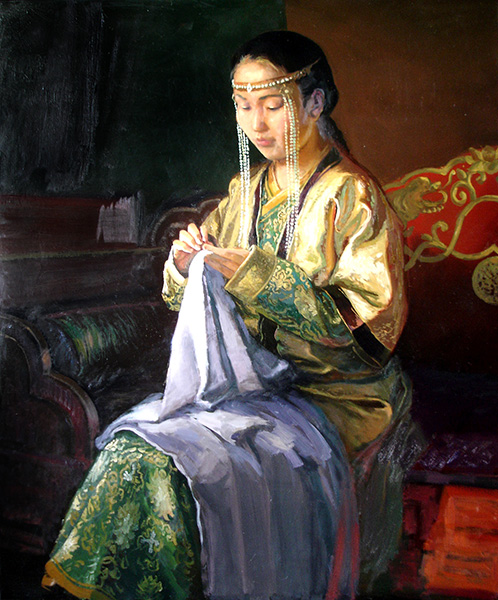
Khadaan (2006) is a striking testament to the technical mastery and soulful vision of Mongolian artist Batjargal Tseintsogzol. Painted at the height of his career, this oil-on-canvas work measures 80 x 60 cm and serves as a profound example of his dedication to Photorealism and the raw, unyielding beauty of the Mongolian landscape.
Composition and Visual Style
The painting focuses on the rugged geological textures of Mongolia, specifically the “Khadaan” (meaning “rocks” or “cliffs” in Mongolian). Tseintsogzol’s approach transcends mere representation; his brushwork is so meticulous that the canvas mimics the high-definition clarity of a photograph.
Texture: Every crack, lichen growth, and weathered surface of the stone is rendered with anatomical precision. You can almost feel the physical grit and the ancient history embedded in the rock faces.
Lighting: The artist utilizes a naturalistic light source that casts soft yet defining shadows, creating a three-dimensional depth that makes the rocks appear to extrude from the canvas.
Palette: The color scheme is grounded in earthy ochres, cool greys, and muted mossy greens, reflecting the literal colors of the Mongolian steppe while maintaining a serene, almost meditative atmosphere.
Cultural and Emotional Context
Born in Ulaanbaatar in 1966, Tseintsogzol was deeply connected to the nomadic spirit and the permanence of nature. In Khadaan, the artist elevates a seemingly “still” or “inanimate” subject into something monumental.
Nature as Monument: By choosing an 80 x 60 cm format—a portrait orientation often reserved for human subjects—he treats the cliffs with the same dignity and character one would give a person.
The Realist Philosophy: Unlike the more abstract or traditional “Mongol Zurag” styles, Tseintsogzol’s Realism seeks truth in the details. He captures the resilience of the Mongolian environment, suggesting that while civilizations change, these stones remain as silent witnesses.
Artistic Legacy
Tragically passing in 2020, Batjargal Tseintsogzol left behind a body of work that bridged the gap between traditional Mongolian appreciation for nature and contemporary global Photorealism. Khadaan remains a definitive piece of his legacy, showcasing his ability to find the extraordinary within the ordinary elements of the earth.
Note: This painting is often cited by collectors of Central Asian contemporary art for its balance of technical “cold” realism and “warm” emotional resonance.