

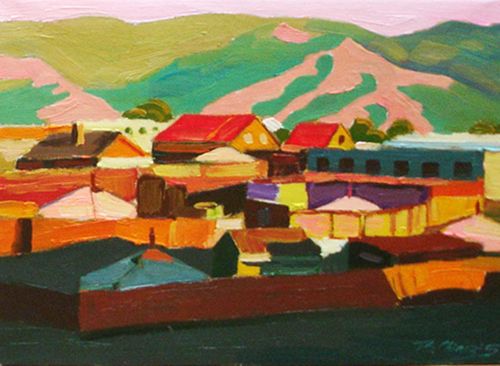
Measuring just 30 by 40 centimeters, Ger District is an intimate and masterfully executed oil painting that demands the viewer step close. Despite its modest size, Tulgabaatar utilizes a striking blend of photorealism and figurative art to capture the sprawling, complex reality of Ulaanbaatar’s outskirts. The canvas is divided between a compelling central portrait in the foreground and the sweeping, structured landscape of the ger district in the background.
The Central Figure (Portrait & Figurative Art) At the heart of the composition stands a solitary figure—likely a resident of the district—rendered with breathtaking photorealism. The subject, perhaps an elder with deeply weathered skin or a younger individual wrapped in a heavy, textured deel (traditional Mongolian clothing) layered with modern winter wear, anchors the painting. Tulgabaatar’s brushwork is so precise that the viewer can perceive the individual threads of the fabric, the subtle sheen of natural oils on the subject’s skin, and the sharp, hyper-realistic glint of sunlight catching their eyes. The figure’s posture is stoic yet natural, bridging the gap between a formal portrait and a candid slice of daily life.
The Environment (Landscape, Nature & Realism) Behind the figure, the painting expands into a meticulously detailed landscape of the Ulaanbaatar Ger District. Tulgabaatar captures the unique topography of the area: a rolling cascade of traditional white felt gers (yurts) interspersed with rudimentary brick houses, all partitioned by seemingly endless rows of weathered wooden khashaa (fences).
The “Nature” aspect of the prompt is subtly woven into the harsh but beautiful Mongolian environment. The dusty, unpaved earth of the streets is painted with a stark realism that makes the dirt look almost tangible. In the distance, the rugged, natural hills surrounding Ulaanbaatar rise up, framing the human settlement. The sky above is likely painted in the vast, piercingly clear blue that Mongolia is famous for, providing a stark contrast to the dense, earth-toned human sprawl below.
Technique and Mastery (Photorealism in Oil) Painted in 2007, when Tulgabaatar was just 22 years old, the piece showcases an extraordinary command of oil paint. The photorealistic style requires immense patience, especially on a canvas this small. The artist uses light masterfully to differentiate textures: the soft, matte finish of the felt gers, the splintering, dry wood of the fences, the coarse fabric of the figure’s clothing, and the atmospheric haze of smoke gently rising from the ger chimneys. The lighting suggests the “golden hour” of early morning or late afternoon, casting long, sharp shadows that give the 30x40cm canvas a profound sense of three-dimensional depth.
Thematic ResonanceGer District is more than a display of technical skill; it is a profound documentary piece. By placing a highly detailed portrait against the backdrop of the city’s rapidly expanding, unplanned settlements, Tulgabaatar captures the tension of a society in transition. It reflects the reality of nomadic traditions meeting modern urbanization—a defining characteristic of Ulaanbaatar in the 2000s. The painting feels both like a tribute to the resilience of the Mongolian people and a stark,
