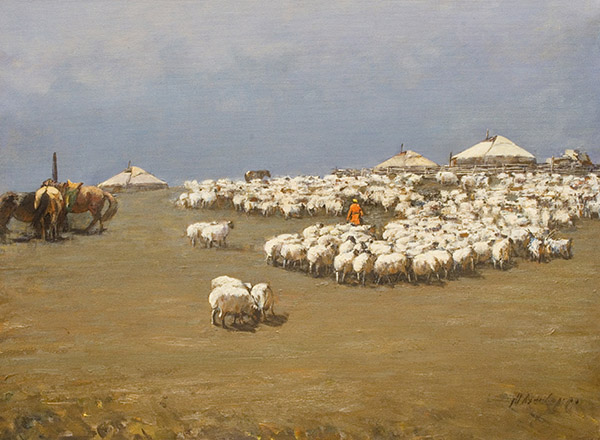
3 Gers,3 Horses And Sheep

Lkhagvadorj Mijid , 2006 , Oil On Canvas

1. The Composition and Subject

  • The Flock: The center of the painting is anchored by a dense, swirling mass of sheep and goats. They are clustered tightly together, creating a sea of white and cream textures against the earthy ground.

  • The Shepherd: In the middle of the flock, a single figure stands out, dressed in a bright orange deel (traditional robe). This splash of vivid color draws the eye immediately, acting as the focal point amidst the neutral tones of the herd and landscape.

  • The Horses: To the left, three horses are tethered or standing close together. They are saddled, suggesting they are working animals ready for use, likely by the herders managing the flock.

  • The Gers: In the background, three white gers (yurts) are set against the horizon. Their placement establishes this as a temporary home or seasonal camp. Smoke rising from the chimneys would suggest domestic activity within.

2. The Landscape and Atmosphere

  • The Steppe: The ground is painted in warm, earthy tones—browns, tans, and hints of yellow—depicting the dry, vast steppe of Mongolia.

  • The Sky: The sky is a soft, muted blue with some cloud cover, taking up the upper third of the canvas. It provides a calm, expansive backdrop that emphasizes the isolation and peacefulness of the camp.

3. Artistic Style

  • Realism: The artist, Lkhagvadorj Mijid, is known for his realistic portrayals of nature and landscape. The attention to the posture of the horses and the behavior of the flock reflects a deep familiarity with the subject matter.

  • Narrative: Like the other paintings in this series, this work tells a quiet story of daily survival and coexistence with nature. It depicts the symbiotic relationship between the nomad, their shelter, and their livestock.

4. Cultural Context This scene represents the heart of the nomadic economy and lifestyle. The proximity of the animals to the gers indicates a close-knit daily routine where family life and herding duties are inseparable.

75% Embellish

You will get exact same copy of the original
$ 1000
  • Premium Look
  • 100% original
Premium

50% Embellish

$650

30% Embellish

$500

  • Lkhagvadorj Mijid
  • Early 21st Century
  • Landscape, Nature, Realism
  • Oil on canvas
  • LHD69/007
  • 50 x 70cm19" x 27"
  • Mongolian Art Gallery

Add Your Comment

Mongolian Art Gallery © 2025. All Rights Reserved
Privacy Policy / Terms of Use

1. The Composition and Subject

  • The Flock: The center of the painting is anchored by a dense, swirling mass of sheep and goats. They are clustered tightly together, creating a sea of white and cream textures against the earthy ground.

  • The Shepherd: In the middle of the flock, a single figure stands out, dressed in a bright orange deel (traditional robe). This splash of vivid color draws the eye immediately, acting as the focal point amidst the neutral tones of the herd and landscape.

  • The Horses: To the left, three horses are tethered or standing close together. They are saddled, suggesting they are working animals ready for use, likely by the herders managing the flock.

  • The Gers: In the background, three white gers (yurts) are set against the horizon. Their placement establishes this as a temporary home or seasonal camp. Smoke rising from the chimneys would suggest domestic activity within.

2. The Landscape and Atmosphere

  • The Steppe: The ground is painted in warm, earthy tones—browns, tans, and hints of yellow—depicting the dry, vast steppe of Mongolia.

  • The Sky: The sky is a soft, muted blue with some cloud cover, taking up the upper third of the canvas. It provides a calm, expansive backdrop that emphasizes the isolation and peacefulness of the camp.

3. Artistic Style

  • Realism: The artist, Lkhagvadorj Mijid, is known for his realistic portrayals of nature and landscape. The attention to the posture of the horses and the behavior of the flock reflects a deep familiarity with the subject matter.

  • Narrative: Like the other paintings in this series, this work tells a quiet story of daily survival and coexistence with nature. It depicts the symbiotic relationship between the nomad, their shelter, and their livestock.

4. Cultural Context This scene represents the heart of the nomadic economy and lifestyle. The proximity of the animals to the gers indicates a close-knit daily routine where family life and herding duties are inseparable.

75% Embellish

You will get exact same copy of the original
$ 1000
  • Premium Look
  • 100% original
Premium

50% Embellish

$650

30% Embellish

$500