1. The Foreground: Human Connection
-
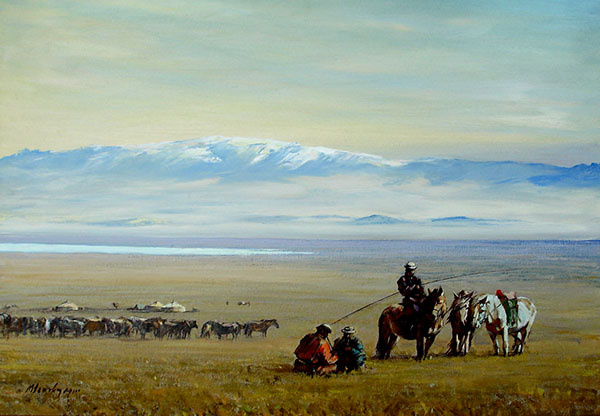
The Figures: In the immediate foreground, two men are seated on the grass. One wears a vibrant reddish-orange deel (traditional tunic), while the other is in darker clothing. They appear to be engaged in a casual break, likely sharing a pipe or a snuff bottle—a traditional gesture of greeting and friendship in Mongolian culture.
-
The Herder: Standing over them is a third figure mounted on a horse. This rider holds a long pole, known as an uurga (a lasso pole used for catching horses), signaling that they are in the midst of herding work.
-
The Horses: Beside the mounted rider are two other saddled horses, waiting patiently. Their tack and posture are rendered with attention to realistic detail.
2. The Mid-Ground: Pastoral Life
-
The Herd: To the left, in the middle distance, a large herd of horses is grazing peacefully.
-
The Camp: Further back, near the edge of a body of water, several white gers (yurts) are visible. This indicates the location of the herders’ camp, situated near a vital water source.
-
The Lake: A strip of blue water stretches across the horizon line of the plain, separating the grassy steppe from the mountains.
3. The Background: Majestic Landscape
-
Snow-Capped Mountains: The background is dominated by a massive, snow-covered mountain range. The mountains are painted in soft whites and blues, suggesting they are far away yet immense.
-
Atmospheric Perspective: A layer of mist or haze hovers at the base of the mountains, blending the horizon with the sky. This creates a profound sense of depth and scale, making the human figures in the foreground appear small within the vast environment.
4. Mood and Atmosphere The painting captures a moment of calm amidst labor. The mood is relaxed and peaceful, emphasizing the slow, rhythmic pace of nomadic life where work, nature, and community are deeply intertwined. The lighting suggests a clear, bright day, typical of the “Land of the Eternal Blue Sky.”