
The USP: A Masterclass in Nomadic Elegance and Precision
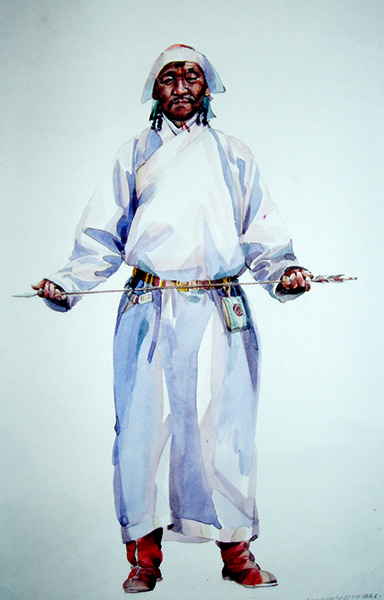
This 2005 watercolor is a breathtaking window into the sophisticated soul of the Mongol Empire. Measuring a refined 32 x 23.5cm, the work eschews the typical imagery of conquest to instead focus on the stately poise and cultural richness of the 13th-century elite.
What sets this piece apart is Amarsanaa Galmandakh’s extraordinary command over the watercolor medium. He manages to balance the soft, bleeding gradients of the background with the razor-sharp, intricate detailing of traditional aristocratic attire. Every delicate line on the subject’s headgear and the layered textures of the silk robes speak to a high-born status, rendered with such historical reverence that the subject seems to breathe through the paper. It is a work of quiet authority, capturing a moment of dignified reflection. For the discerning collector, this painting offers a rare blend of ethnographic accuracy and fine-art etherealism, making it an evocative centerpiece that honors a legacy of power and refinement.
About the Artist
Amarsanaa Galmandakh (b. 1974) is a celebrated contemporary artist from Ulaanbaatar, Mongolia, whose work serves as a vital link to his nation’s storied past. Educated in the rich artistic traditions of Mongolia, Galmandakh has mastered the delicate balance of watercolor to portray the strength and beauty of his ancestors. His portfolio is defined by a deep-seated respect for historical detail and a modern sensibility for light and form, establishing him as a prominent voice in the preservation of Mongolian heritage through fine art.