

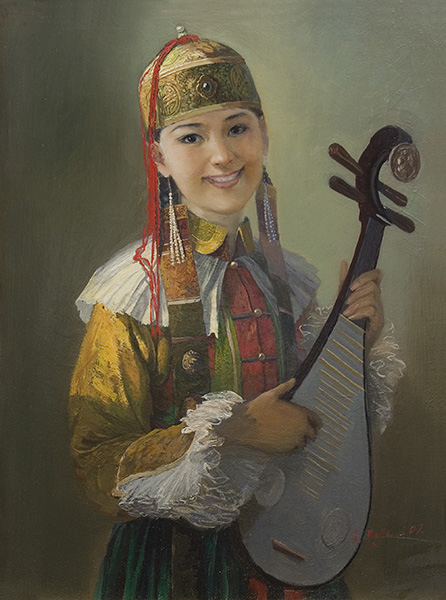
This 2008 oil on canvas masterpiece by the late Batjargal Tseintsogzol is a profound example of Contemporary Mongolian Realism. Measuring 70 x 50cm, the portrait captures the dignified essence of a Mongolian woman, blending the artist’s signature photorealistic precision with a deep, soulful appreciation for cultural heritage.
Visual Composition and Style
Tseintsogzol, a master of Photorealism, utilizes a tight, vertical composition that demands an intimate connection between the subject and the viewer. The painting is characterized by:
Exceptional Detail: Every texture is rendered with meticulous care—from the subtle sheen of the traditional silk deel to the weathered, sun-kissed complexion of the subject’s skin.
Chiaroscuro Influence: The artist employs a dramatic play of light and shadow, typical of his more mature works. Light strikes the side of the lady’s face, highlighting the wisdom in her expression while allowing the background to recede into a soft, atmospheric haze.
Naturalistic Palette: True to his association with Nature and Realism, the color palette is grounded in earth tones—ochres, deep reds, and soft browns—evocative of the Mongolian steppe and traditional dyes.
Cultural Significance
The “Mongolian Lady” is more than a technical exercise; it is a tribute to the endurance and spirit of the Mongolian people.
“Tseintsogzol’s work often acted as a bridge between the ancient traditions of Ulaanbaatar and the modern world, freezing moments of quiet dignity in a rapidly changing landscape.”
The subject’s gaze is both steady and reflective, suggesting a lifetime of stories lived under the eternal blue sky. By focusing on a single figure, Tseintsogzol elevates the “ordinary” individual to a status of timeless importance, a hallmark of his short but impactful career.
About the Artist
Born in Ulaanbaatar in 1966, Batjargal Tseintsogzol became one of Mongolia’s most respected contemporary painters. His legacy, which ended in 2020, remains defined by his ability to capture the “unseen” soul of his subjects through the “seen” perfection of their physical form.