
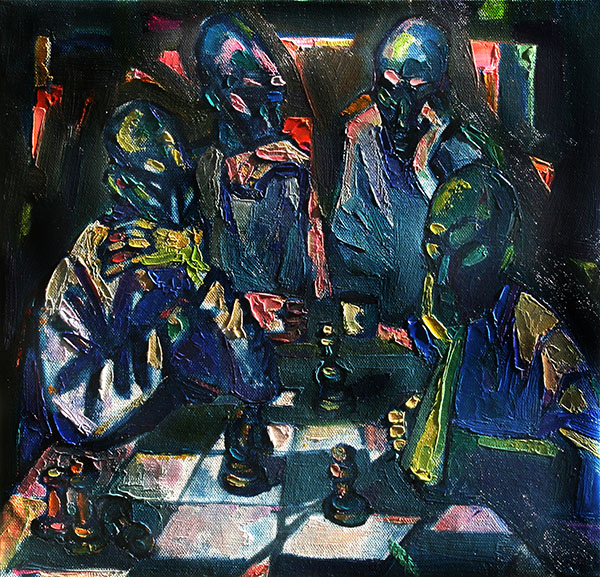
Chess

Amarsanaa Galmandakh , 2010 , Oil On Canvas

The USP: A Masterful Miniature of Strategy, Tension, and Tactile Depth

In the intellectually charged and visually striking Chess, Amarsanaa Galmandakh transforms the age-old game of strategy into a profound, concentrated study of focus and human rivalry. Measuring a perfect 30 x 30cm (11″ x 11″), this 2010 oil on canvas serves as a jewel-like window into a world of quiet intensity, where every move is pregnant with consequence. The unique selling point of this piece is its extraordinary “living surface”; through the masterful application of his signature impasto technique, Galmandakh constructs a tactile topography of rich, layered pigments that allow the chess pieces and the board to emerge with a distinct, three-dimensional presence. As light dances across these textured ridges, the composition shifts in shadow and depth, imbuing the scene with a cinematic vitality that belies its modest scale. The work is a masterclass in distilled tension, where bold, gestural brushstrokes create a rhythmic complexity, capturing the psychological weight of the match. For the discerning collector, Chess is a premium, high-impact statement piece that offers a sophisticated, modern meditation on competition, patience, and the enigmatic allure of the human mind.

About the Artist

Born in 1974 in Ulaanbaatar, Amarsanaa Galmandakh is a prominent figure in the contemporary Mongolian art scene, celebrated for his ability to infuse traditional themes with a modern, philosophical sensibility. His work often explores the intersection of man, nature, and the internal journey, characterized by a refined technical versatility across both oil and watercolor. Galmandakh’s paintings are highly regarded by international collectors for their emotional resonance and their unique capacity to capture both the poetic silence of the landscape and the evolving identity of the Central Asian people.
  • Amarsanaa Galmandakh
  • Early 21st Century
  • Ulaanbaatar, Mongolia
  • Abstract, Figurative, Modern/Contemporary, Mongolian Style, Nude, Portrait
  • Oil on canvas
  • AMR1/096
  • 30 x 30cm11" x 11"
  • Mongolian Art Gallery

Add Your Comment

Mongolian Art Gallery © 2025. All Rights Reserved
Privacy Policy / Terms of Use

The USP: A Masterful Miniature of Strategy, Tension, and Tactile Depth

In the intellectually charged and visually striking Chess, Amarsanaa Galmandakh transforms the age-old game of strategy into a profound, concentrated study of focus and human rivalry. Measuring a perfect 30 x 30cm (11″ x 11″), this 2010 oil on canvas serves as a jewel-like window into a world of quiet intensity, where every move is pregnant with consequence. The unique selling point of this piece is its extraordinary “living surface”; through the masterful application of his signature impasto technique, Galmandakh constructs a tactile topography of rich, layered pigments that allow the chess pieces and the board to emerge with a distinct, three-dimensional presence. As light dances across these textured ridges, the composition shifts in shadow and depth, imbuing the scene with a cinematic vitality that belies its modest scale. The work is a masterclass in distilled tension, where bold, gestural brushstrokes create a rhythmic complexity, capturing the psychological weight of the match. For the discerning collector, Chess is a premium, high-impact statement piece that offers a sophisticated, modern meditation on competition, patience, and the enigmatic allure of the human mind.

About the Artist

Born in 1974 in Ulaanbaatar, Amarsanaa Galmandakh is a prominent figure in the contemporary Mongolian art scene, celebrated for his ability to infuse traditional themes with a modern, philosophical sensibility. His work often explores the intersection of man, nature, and the internal journey, characterized by a refined technical versatility across both oil and watercolor. Galmandakh’s paintings are highly regarded by international collectors for their emotional resonance and their unique capacity to capture both the poetic silence of the landscape and the evolving identity of the Central Asian people.