
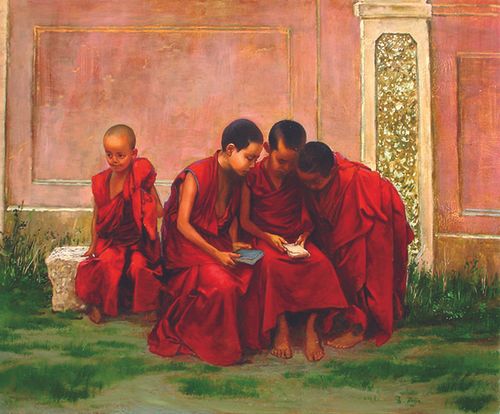
Ekhlel

Batjargal Tseintsogzol , 2006 , Oil On Canvas

Ekhlel (meaning “Beginning” or “Origin”) is a masterful example of Batjargal Tseintsogzol’s ability to blend photorealistic precision with the spiritual weight of Mongolian heritage. The painting captures a moment of profound stillness and potential, rendered with a level of detail that mimics the clarity of a high-definition photograph while retaining the atmospheric warmth of oil on canvas.

The composition centers on the vast, rugged landscapes of Mongolia, likely depicting the transition of light across the steppe or the intricate details of a natural element that serves as a metaphor for birth or creation. Batjargal’s technique is characterized by:

  • Luminous Realism: His use of light creates a tactile quality—whether it is the glint of sun on a frozen stream or the soft texture of weathered stone and earth.

  • Muted Palette: The artist often employed earthy tones, deep blues, and subtle ochres to reflect the raw, unembellished beauty of the Mongolian wilderness.

  • Scale and Scope: At 72.5 x 91.5 cm, the canvas is large enough to immerse the viewer in its environment, emphasizing the insignificance of man against the eternal cycle of nature.

The Artist: Batjargal Tseintsogzol

Batjargal was a cornerstone of contemporary Mongolian realism. Born in Ulaanbaatar, his work moved beyond mere representation; he sought to capture the “soul” of the land. His tragic passing in 2020 marked the end of a career dedicated to documenting the shifting landscapes and cultural identity of his homeland.

His style is often categorized by:

  • Technological Precision: A commitment to photorealism that requires immense patience and a deep understanding of optics.

  • Cultural Connection: Despite the modern technique, his themes remained rooted in traditional nomadic respect for the environment.

Context and Meaning

Created in 2006, Ekhlel represents a period where Batjargal was refining his focus on Nature as a Monument. The title suggests a starting point—perhaps the dawn of a new day, the source of a river, or the primal state of the world before human intervention. It invites the viewer to look past the surface and contemplate the quiet, powerful force of existence.
  • Batjargal Tseintsogzol
  • Expressionist, Surrealism
  • Oil On Canvas
  • BTJ8/032
  • 72.5 x 91.5cm

Add Your Comment

Mongolian Art Gallery © 2025. All Rights Reserved
Privacy Policy / Terms of Use

Ekhlel (meaning “Beginning” or “Origin”) is a masterful example of Batjargal Tseintsogzol’s ability to blend photorealistic precision with the spiritual weight of Mongolian heritage. The painting captures a moment of profound stillness and potential, rendered with a level of detail that mimics the clarity of a high-definition photograph while retaining the atmospheric warmth of oil on canvas.

The composition centers on the vast, rugged landscapes of Mongolia, likely depicting the transition of light across the steppe or the intricate details of a natural element that serves as a metaphor for birth or creation. Batjargal’s technique is characterized by:

  • Luminous Realism: His use of light creates a tactile quality—whether it is the glint of sun on a frozen stream or the soft texture of weathered stone and earth.

  • Muted Palette: The artist often employed earthy tones, deep blues, and subtle ochres to reflect the raw, unembellished beauty of the Mongolian wilderness.

  • Scale and Scope: At 72.5 x 91.5 cm, the canvas is large enough to immerse the viewer in its environment, emphasizing the insignificance of man against the eternal cycle of nature.

The Artist: Batjargal Tseintsogzol

Batjargal was a cornerstone of contemporary Mongolian realism. Born in Ulaanbaatar, his work moved beyond mere representation; he sought to capture the “soul” of the land. His tragic passing in 2020 marked the end of a career dedicated to documenting the shifting landscapes and cultural identity of his homeland.

His style is often categorized by:

  • Technological Precision: A commitment to photorealism that requires immense patience and a deep understanding of optics.

  • Cultural Connection: Despite the modern technique, his themes remained rooted in traditional nomadic respect for the environment.

Context and Meaning

Created in 2006, Ekhlel represents a period where Batjargal was refining his focus on Nature as a Monument. The title suggests a starting point—perhaps the dawn of a new day, the source of a river, or the primal state of the world before human intervention. It invites the viewer to look past the surface and contemplate the quiet, powerful force of existence.