
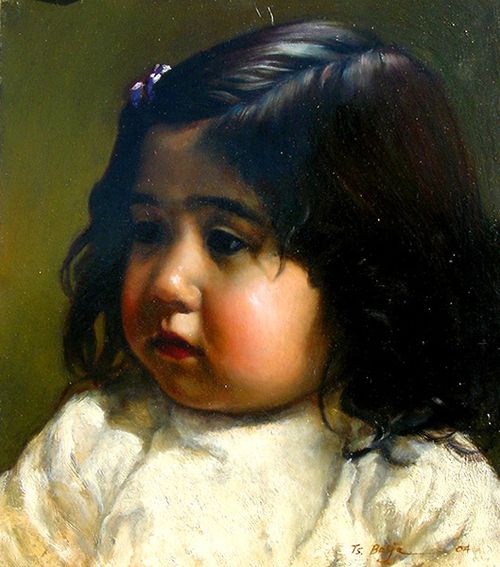
My Zulaa is a compelling testament to the technical mastery and emotional depth of Mongolian artist Batjargal Tseintsogzol. Painted in 2005, this oil-on-canvas work exemplifies the artist’s dedication to Photorealism, a style he used not just to replicate reality, but to honor the quiet, dignified beauty of Mongolian life.
Visual Analysis
Measuring just 30.2 x 35.5 cm, the painting possesses an intimate, jewel-like quality. The small scale forces the viewer to lean in, mirroring the artist’s own meticulous attention to detail.
Subject Matter: The work features “Zulaa,” likely a personal or familiar subject to the artist. In Mongolian culture, “Zulaa” can refer to a traditional butter lamp or a common name, often suggesting a sense of warmth, light, or preciousness.
Technique: Tseintsogzol utilizes the Photorealistic style to capture the subtle interplay of light and shadow. His brushwork is virtually invisible, creating textures—whether the softness of skin, the weave of fabric, or the reflective quality of light—that feel tactile and immediate.
Atmosphere: Despite the precision of the realism, the painting is imbued with a soft, atmospheric quality characteristic of Tseintsogzol’s later works. It bridges the gap between a clinical observation of reality and a deeply felt, Naturalistic appreciation for his subject.
About the Artist
Batjargal Tseintsogzol was a prominent figure in the contemporary Mongolian art scene. Born in Ulaanbaatar, his career was defined by a transition from traditional academic styles to a sophisticated mastery of Realism.
Legacy: His work often centered on the people and landscapes of Mongolia, capturing the transition of his country through a lens of profound stillness.
Style: While he was a master of nature and landscapes, his portraiture—like My Zulaa—is celebrated for its ability to capture the “soul” of the subject through rigorous technical execution.
“Tseintsogzol’s work isn’t just about seeing; it’s about the reverence of looking.”