
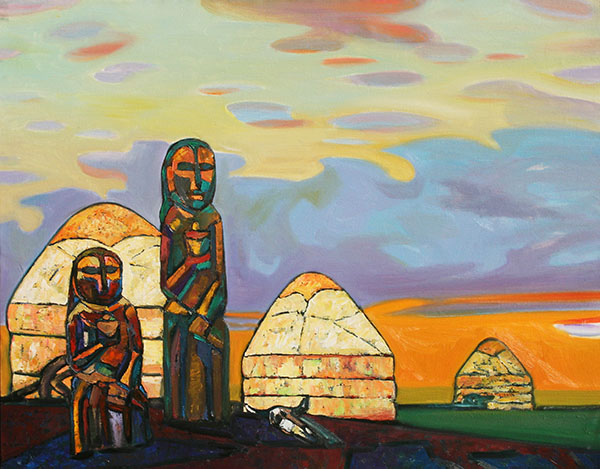
Stone Family

Amarsanaa Galmandakh , 2010 , Oil On Canvas

The USP: A Sculptural Meditation on Heritage and the Enduring Weight of Memory

In the deeply evocative and structurally compelling masterwork Stone Family, Amarsanaa Galmandakh transforms the familiar concept of kinship into a timeless, tectonic narrative. Measuring 72 x 90cm (28″ x 35″), this 2010 oil on canvas serves as a profound exploration of connection and legacy, where the figures are rendered not merely as forms, but as monuments of emotional gravity. The unique selling point of this piece is its extraordinary “living surface”—through the masterful application of his signature impasto technique, Galmandakh constructs a tactile topography of rich, layered pigments that allow the subjects to emerge with a distinct, three-dimensional sculptural presence. As light dances across these textured ridges, the composition shifts, imbuing the figures with a sense of permanence that mirrors the strength of stone. This work is a masterclass in emotional balance, where bold, gestural brushwork is tempered by subtle, atmospheric nuance, lending the scene an aura of ancient wisdom and protective unity. For the discerning collector, Stone Family is a premium, high-impact statement piece that offers a sophisticated, modern meditation on the bonds that ground us and the enduring nature of the human spirit.

About the Artist

Born in 1974 in Ulaanbaatar, Amarsanaa Galmandakh is a prominent figure in the contemporary Mongolian art scene, celebrated for his ability to infuse traditional themes with a modern, philosophical sensibility. His work often explores the intersection of man, nature, and the internal journey, characterized by a refined technical versatility across both oil and watercolor. Galmandakh’s paintings are highly regarded by international collectors for their emotional resonance and their unique capacity to capture both the poetic silence of the landscape and the evolving identity of the Central Asian people.
  • Amarsanaa Galmandakh
  • Early 21st Century
  • Abstract, Figurative, Modern/Contemporary, Mongolian Style, Nude, Portrait
  • Oil On Canvas
  • AMR1/091
  • 72 x 90cm28" x 35"
  • Mangolian Art Gallery

Add Your Comment

Mongolian Art Gallery © 2025. All Rights Reserved
Privacy Policy / Terms of Use

The USP: A Sculptural Meditation on Heritage and the Enduring Weight of Memory

In the deeply evocative and structurally compelling masterwork Stone Family, Amarsanaa Galmandakh transforms the familiar concept of kinship into a timeless, tectonic narrative. Measuring 72 x 90cm (28″ x 35″), this 2010 oil on canvas serves as a profound exploration of connection and legacy, where the figures are rendered not merely as forms, but as monuments of emotional gravity. The unique selling point of this piece is its extraordinary “living surface”—through the masterful application of his signature impasto technique, Galmandakh constructs a tactile topography of rich, layered pigments that allow the subjects to emerge with a distinct, three-dimensional sculptural presence. As light dances across these textured ridges, the composition shifts, imbuing the figures with a sense of permanence that mirrors the strength of stone. This work is a masterclass in emotional balance, where bold, gestural brushwork is tempered by subtle, atmospheric nuance, lending the scene an aura of ancient wisdom and protective unity. For the discerning collector, Stone Family is a premium, high-impact statement piece that offers a sophisticated, modern meditation on the bonds that ground us and the enduring nature of the human spirit.

About the Artist

Born in 1974 in Ulaanbaatar, Amarsanaa Galmandakh is a prominent figure in the contemporary Mongolian art scene, celebrated for his ability to infuse traditional themes with a modern, philosophical sensibility. His work often explores the intersection of man, nature, and the internal journey, characterized by a refined technical versatility across both oil and watercolor. Galmandakh’s paintings are highly regarded by international collectors for their emotional resonance and their unique capacity to capture both the poetic silence of the landscape and the evolving identity of the Central Asian people.