
The USP: A Monumental Celebration of the Nomadic Heartland
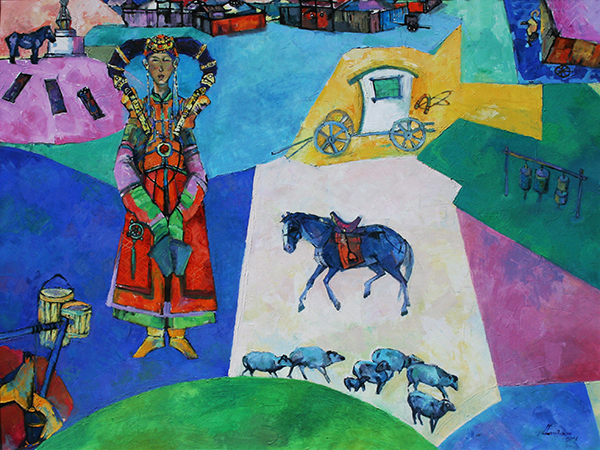
In the commanding masterwork Ger Village, Amarsanaa Galmandakh captures the timeless essence of Mongolian life on an expansive, cinematic scale. Measuring a magnificent 120 x 140cm (47″ x 55″), this oil on canvas serves as a powerful anchor for any space, inviting the viewer to step directly into the rhythmic heart of the steppe. Galmandakh masterfully utilizes the generous surface area to showcase his signature impasto technique, where thick, deliberate strokes of oil create a rich, tactile topography that mirrors the rugged beauty of the landscape. The scene is bathed in a sophisticated play of light, illuminating the traditional white gers against the vast, atmospheric horizon of the high plateau. This is a premium statement piece that balances the grandeur of the open plains with the intimate warmth of community; it is a profound tribute to the enduring spirit of the nomadic people, rendered with a modern, philosophical depth that marks it as a cornerstone of contemporary Mongolian art.
About the Artist
Born in 1974 in Ulaanbaatar, Amarsanaa Galmandakh is a prominent figure in the contemporary Mongolian art scene, celebrated for his ability to infuse traditional themes with a modern, philosophical sensibility. His work often explores the intersection of man, nature, and the internal journey, characterized by a refined technical versatility across both oil and watercolor. Galmandakh’s paintings are highly regarded by international collectors for their emotional resonance and their unique capacity to capture both the poetic silence of the landscape and the evolving identity of the Central Asian people.