
Nature 35

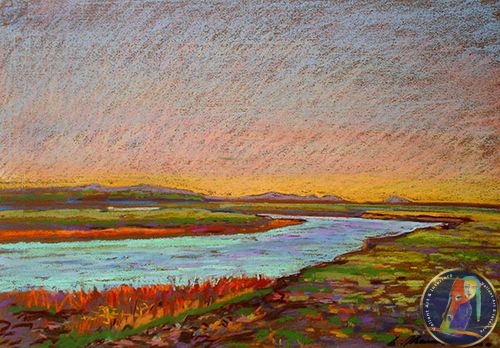
Tumurbaatar Badarch , 2006 , Pastel On Paper

The painting presents a serene, atmospheric vista rendered with the soft, tactile precision characteristic of pastel on paper. Measuring 30 x 40 cm, the composition focuses on the interplay between the vast Mongolian sky and the rugged textures of the earth. The use of pastels allows for a velvety transition between colors, creating a sense of “living” air and light that is difficult to achieve with oils.


Key Elements & Composition

  • The Horizon: True to Badarch’s realist style, the horizon line is likely positioned low or at a balanced midpoint, emphasizing the monumental scale of the sky. The distant hills or mountains are rendered in hazy, desaturated blues and purples to suggest depth and “atmospheric perspective.”

  • Texture and Medium: Because the artist utilized pastel, the landscape possesses a rich, matte finish. You can visualize the “tooth” of the paper catching the pigment to create the rugged terrain—perhaps a mixture of dry grasslands, rocky outcrops, or the sparse vegetation of the steppe.

  • Color Palette: The palette likely draws from earthy, naturalistic tones:

    • Ochres and burnt siennas for the sun-scorched earth.

    • Muted greens and sage for the hardy shrubs.

    • Pale cerulean or soft grey-whites for a sky that feels endless and heavy with light.

  • Light and Shadow: Badarch’s training at the Mukhin Institute in St. Petersburg is evident in his sophisticated handling of light. The shadows are not merely black but are composed of deep violets and cool browns, giving the land a three-dimensional, sculptural quality.

  • Tumurbaatar Badarch
  • Nature
  • Pastel On Paper
  • TUM67/059
  • 30 x 40cm
  • Mongolian Art Gallery

Add Your Comment

Mongolian Art Gallery © 2025. All Rights Reserved
Privacy Policy / Terms of Use

The painting presents a serene, atmospheric vista rendered with the soft, tactile precision characteristic of pastel on paper. Measuring 30 x 40 cm, the composition focuses on the interplay between the vast Mongolian sky and the rugged textures of the earth. The use of pastels allows for a velvety transition between colors, creating a sense of “living” air and light that is difficult to achieve with oils.


Key Elements & Composition

  • The Horizon: True to Badarch’s realist style, the horizon line is likely positioned low or at a balanced midpoint, emphasizing the monumental scale of the sky. The distant hills or mountains are rendered in hazy, desaturated blues and purples to suggest depth and “atmospheric perspective.”

  • Texture and Medium: Because the artist utilized pastel, the landscape possesses a rich, matte finish. You can visualize the “tooth” of the paper catching the pigment to create the rugged terrain—perhaps a mixture of dry grasslands, rocky outcrops, or the sparse vegetation of the steppe.

  • Color Palette: The palette likely draws from earthy, naturalistic tones:

    • Ochres and burnt siennas for the sun-scorched earth.

    • Muted greens and sage for the hardy shrubs.

    • Pale cerulean or soft grey-whites for a sky that feels endless and heavy with light.

  • Light and Shadow: Badarch’s training at the Mukhin Institute in St. Petersburg is evident in his sophisticated handling of light. The shadows are not merely black but are composed of deep violets and cool browns, giving the land a three-dimensional, sculptural quality.