
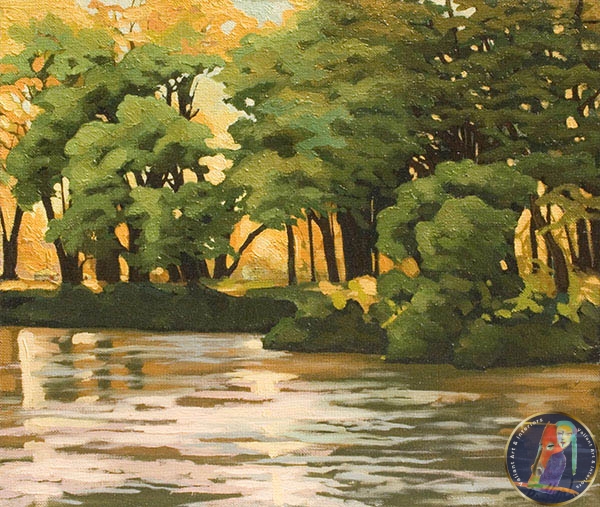
Sudalvar 6, an evocative oil-on-canvas work by Uuganbayar Amgalanbayar, serves as a poignant intersection between the artist’s mastery of realism and his profound connection to the Mongolian landscape. Created in 2008, the painting captures the quiet, enduring spirit of the Bayankhongor region—a hallmark of Amgalanbayar’s aesthetic, which frequently bridges the gap between figurative precision and atmospheric nature studies.
Composition and Technique
Measuring 50 x 60 cm, the composition is intimate yet expansive, utilizing the standard portrait-landscape orientation to draw the viewer into a specific, captured moment in time. Amgalanbayar employs a refined realism that prioritizes the texture of the environment; the brushwork is deliberate, favoring subtle transitions in light and shadow that define the topographical features of the terrain.
The color palette is rooted in the earth tones characteristic of the Mongolian steppe—deep ochres, muted slate grays, and the faded, sun-bleached greens of seasonal grasses. These pigments are rendered with the technical depth expected of an oil medium, allowing for a richness that conveys the cooling air of the plains at a particular time of day.
Thematic Resonance
The title, Sudalvar 6, suggests a series-based exploration, implying that this piece is part of a broader, systematic inquiry into the structure of his homeland. The painting does not merely document a location; it functions as a portrait of the land itself. By treating the landscape with the same analytical gaze he applies to portraiture, Amgalanbayar elevates the composition beyond a simple scenic view, turning it into a study of character—both geological and emotional.
Provenance and Context
As an early-career work (Accession Number: URR74/006), this piece highlights the evolution of Amgalanbayar’s stylistic trajectory. It reflects the formative years following his emergence, showcasing a disciplined restraint that would later define his more complex figurative works. The canvas stands as a testament to the artist’s early devotion to capturing the authentic, unadorned beauty of his birthplace, Bayanbulag, setting the stage for the narrative depth that continues to define his current portfolio.