
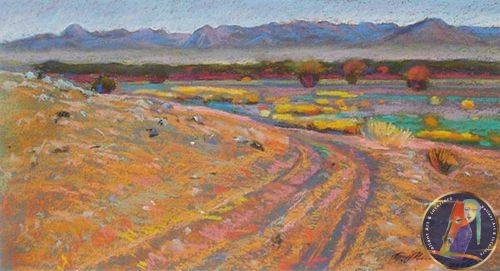
Nature 11

Tumurbaatar Badarch , 2006 , Pastel On Paper

Nature 11 is a poignant testament to Tumurbaatar Badarch’s mastery of the pastel medium and his deep-seated connection to the Mongolian landscape. Created in 2006, this 30 x 40cm work on paper exemplifies the artist’s ability to blend the rigorous technical training of the St. Petersburg tradition with the atmospheric soul of Central Asian realism.

Composition and Visual Elements

The painting captures a serene, contemplative moment in the natural world. Utilizing the soft, blendable qualities of pastel, Badarch creates a surface rich in texture and subtle tonal transitions.

  • Atmosphere: The work is characterized by a soft, diffused light that suggests a specific time of day—perhaps the hazy clarity of early morning or the muted glow of late afternoon.

  • Color Palette: Staying true to his realist roots, Badarch employs a sophisticated palette of earth tones. Expect a harmony of ochres, deep greens, and weathered browns, punctuated by the delicate, airy strokes typical of high-quality pastel work.

  • Focus: Unlike grand, sweeping panoramas, the “Nature” series often focuses on the quiet dignity of specific landscape elements—a cluster of trees, the curve of a steppe hill, or the interplay of light on sparse vegetation.


Artistic Context and Style

Badarch’s style is a unique synthesis of his educational background and his heritage:

  • The Russian Influence: His time at the Mukhin Institute in St. Petersburg is evident in the painting’s structural integrity. Even in a medium as fluid as pastel, there is an underlying precision in the draftsmanship and an academic understanding of light and shadow.

  • The Mongolian Identity: While the technique is European, the spirit is entirely Mongolian. There is a sense of “Oron Zai” (Space)—a concept central to Mongolian art that emphasizes the vastness and spiritual weight of the land.

About the Artist: Tumurbaatar Badarch

Born in 1958 in Ulaanbaatar, Badarch has become a staple of the Mongolian art scene. His career, spanning from the late 1970s to the present, bridges the gap between traditional Mongolian aesthetics and international realism.

Key Fact: Badarch is a long-standing member of the Union of Mongolian Artists (UMA) and the “Oron Zai” art association, groups dedicated to exploring the boundaries of contemporary Mongolian painting while respecting classical techniques.

  • Tumurbaatar Badarch
  • Mongolian Style, Nature
  • Pastel On Paper
  • TUM67/033
  • 30 x 40cm
  • Mongolian Art Gallery

Add Your Comment

Mongolian Art Gallery © 2025. All Rights Reserved
Privacy Policy / Terms of Use

Nature 11 is a poignant testament to Tumurbaatar Badarch’s mastery of the pastel medium and his deep-seated connection to the Mongolian landscape. Created in 2006, this 30 x 40cm work on paper exemplifies the artist’s ability to blend the rigorous technical training of the St. Petersburg tradition with the atmospheric soul of Central Asian realism.

Composition and Visual Elements

The painting captures a serene, contemplative moment in the natural world. Utilizing the soft, blendable qualities of pastel, Badarch creates a surface rich in texture and subtle tonal transitions.

  • Atmosphere: The work is characterized by a soft, diffused light that suggests a specific time of day—perhaps the hazy clarity of early morning or the muted glow of late afternoon.

  • Color Palette: Staying true to his realist roots, Badarch employs a sophisticated palette of earth tones. Expect a harmony of ochres, deep greens, and weathered browns, punctuated by the delicate, airy strokes typical of high-quality pastel work.

  • Focus: Unlike grand, sweeping panoramas, the “Nature” series often focuses on the quiet dignity of specific landscape elements—a cluster of trees, the curve of a steppe hill, or the interplay of light on sparse vegetation.


Artistic Context and Style

Badarch’s style is a unique synthesis of his educational background and his heritage:

  • The Russian Influence: His time at the Mukhin Institute in St. Petersburg is evident in the painting’s structural integrity. Even in a medium as fluid as pastel, there is an underlying precision in the draftsmanship and an academic understanding of light and shadow.

  • The Mongolian Identity: While the technique is European, the spirit is entirely Mongolian. There is a sense of “Oron Zai” (Space)—a concept central to Mongolian art that emphasizes the vastness and spiritual weight of the land.

About the Artist: Tumurbaatar Badarch

Born in 1958 in Ulaanbaatar, Badarch has become a staple of the Mongolian art scene. His career, spanning from the late 1970s to the present, bridges the gap between traditional Mongolian aesthetics and international realism.

Key Fact: Badarch is a long-standing member of the Union of Mongolian Artists (UMA) and the “Oron Zai” art association, groups dedicated to exploring the boundaries of contemporary Mongolian painting while respecting classical techniques.