
Nature 59

Tumurbaatar Badarch , 2006 , Pastel On Paper

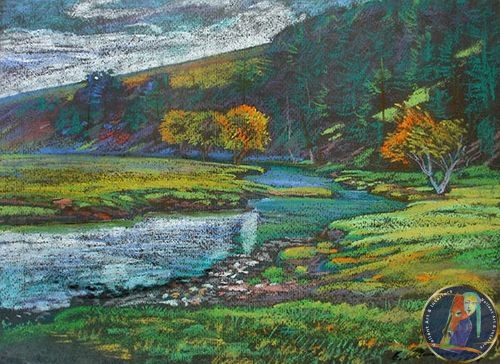
Nature 59 is a masterclass in the soft, tactile qualities of pastel, capturing the serene and rugged essence of the Mongolian wilderness. True to Tumurbaatar Badarch’s roots in Realism, the painting presents a balanced landscape that feels both intimate and expansive.

  • Composition & Perspective: The artwork utilizes a traditional horizontal layout, drawing the viewer’s eye from a detailed foreground of low-lying shrubbery and textured earth toward a soft, undulating horizon. The 30 x 40 cm scale gives the piece a window-like quality, inviting a focused meditation on a specific moment in time.

  • Color Palette: Badarch employs a sophisticated palette of earth tones. Expect a range of ochres, burnt sienna, and muted olives that define the arid beauty of the Mongolian steppe. These are likely contrasted against a sky rendered in pale cerulean or soft greys, using the blending capabilities of pastel to create a seamless atmospheric haze.

  • Light and Atmosphere: The light is diffused, suggesting either the gentle clarity of early morning or the cooling transition of dusk. Because the artist was trained in the Mukhin Institute in St. Petersburg, there is a technical rigor in how the light interacts with the topography—every fold in the distant hills is defined by subtle shifts in value rather than harsh lines.

  • Texture: The choice of pastel on paper is critical here. The grainy texture of the medium mimics the dry, dusty environment of the landscape. High-pigment strokes are used to highlight the jagged edges of rocks or the wispy tops of dry grass, while broader, smudged strokes create the illusion of vast distance and soft clouds.
  • Tumurbaatar Badarch
  • Nature, Photorealism
  • Pastel On Paper
  • TUM67/017
  • 30 x 40cm
  • Mongolian Art Gallery

Add Your Comment

Mongolian Art Gallery © 2025. All Rights Reserved
Privacy Policy / Terms of Use

Nature 59 is a masterclass in the soft, tactile qualities of pastel, capturing the serene and rugged essence of the Mongolian wilderness. True to Tumurbaatar Badarch’s roots in Realism, the painting presents a balanced landscape that feels both intimate and expansive.

  • Composition & Perspective: The artwork utilizes a traditional horizontal layout, drawing the viewer’s eye from a detailed foreground of low-lying shrubbery and textured earth toward a soft, undulating horizon. The 30 x 40 cm scale gives the piece a window-like quality, inviting a focused meditation on a specific moment in time.

  • Color Palette: Badarch employs a sophisticated palette of earth tones. Expect a range of ochres, burnt sienna, and muted olives that define the arid beauty of the Mongolian steppe. These are likely contrasted against a sky rendered in pale cerulean or soft greys, using the blending capabilities of pastel to create a seamless atmospheric haze.

  • Light and Atmosphere: The light is diffused, suggesting either the gentle clarity of early morning or the cooling transition of dusk. Because the artist was trained in the Mukhin Institute in St. Petersburg, there is a technical rigor in how the light interacts with the topography—every fold in the distant hills is defined by subtle shifts in value rather than harsh lines.

  • Texture: The choice of pastel on paper is critical here. The grainy texture of the medium mimics the dry, dusty environment of the landscape. High-pigment strokes are used to highlight the jagged edges of rocks or the wispy tops of dry grass, while broader, smudged strokes create the illusion of vast distance and soft clouds.