Spring

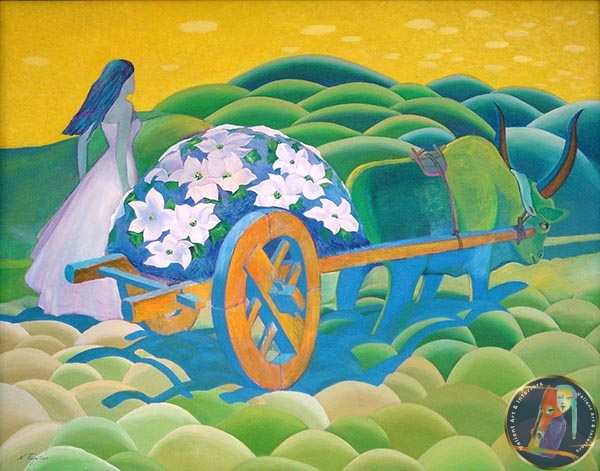
Tuya Natsagdorj , 2006 , Oil On Canvas

Spring is a contemporary Mongolian figurative oil painting that synthesizes East Asian compositional clarity with European modernist and symbolist elegance. True to Natsagdorj’s signature artistic style, the painting features a highly stylized, poetic depiction of the female form, deeply intertwined with symbolic elements of nature to evoke the spiritual and physical awakening of the season.

Composition and Subject Matter

The composition is anchored by a central, stylized female figure who serves as an allegory for Spring itself. Her form is rendered with smooth, flowing lines and an elegant, elongated geometry that reflects the artist’s background in scenic design and formal fine arts training.

Rather than a strictly realistic portrait, the figure possesses a mythic, goddess-like presence. Her posture and expression are serene and introspective, capturing a quiet moment of transition. She is surrounded by, or seamlessly emerges from, an organic tapestry of shifting shapes and delicate botanical motifs. Softly blooming floral patterns or drifting petals interweave with her hair and garments, blurring the line between humanity and the natural world as it shakes off the remnants of a harsh Mongolian winter.

Color Palette and Texture

The color theory heavily relies on a balanced spectrum of cool and awakening tones:

  • Dominant Hues: Deep, luminous blues, soft teals, and earthy undertones provide a atmospheric background, referencing the “Eternal Blue Sky” of Mongolian heritage and the cool crispness of early spring.

  • Accents: Gentle pastels, pale creams, or warm flesh tones highlight the figure and the nascent blossoms, symbolizing the gradual return of warmth, sunlight, and fertility to the landscape.

The application of the oil paint is smooth yet rich, with subtle gradations of light and shadow that give the flat, decorative shapes a deceptive sense of depth and volume.

Style and Symbolism

Natsagdorj expertly bridges traditional Mongolian ornamental symbolism with global modernism. The painting avoids dramatic perspective in favor of a balanced, almost flat decorative plane reminiscent of traditional Asian scrolls, yet it vibrates with the expressive emotional weight of Western modernism. The overall atmosphere of Spring is one of quiet optimism, capturing not the explosive heat of summer, but the delicate, sacred, and internal moment of rebirth.
  • Tuya Natsagdorj
  • Ulaanbaatar, Mongolia
  • Abstract, Expressionist, Figurative, Modern/Contemporary, Still Life
  • Oil on canvas
  • TUY49/011
  • 49.5 x 69.5cm19" x 27"
  • Valiant Art & Interiors

Add Your Comment

Mongolian Art Gallery © 2025. All Rights Reserved
Privacy Policy / Terms of Use

Spring is a contemporary Mongolian figurative oil painting that synthesizes East Asian compositional clarity with European modernist and symbolist elegance. True to Natsagdorj’s signature artistic style, the painting features a highly stylized, poetic depiction of the female form, deeply intertwined with symbolic elements of nature to evoke the spiritual and physical awakening of the season.

Composition and Subject Matter

The composition is anchored by a central, stylized female figure who serves as an allegory for Spring itself. Her form is rendered with smooth, flowing lines and an elegant, elongated geometry that reflects the artist’s background in scenic design and formal fine arts training.

Rather than a strictly realistic portrait, the figure possesses a mythic, goddess-like presence. Her posture and expression are serene and introspective, capturing a quiet moment of transition. She is surrounded by, or seamlessly emerges from, an organic tapestry of shifting shapes and delicate botanical motifs. Softly blooming floral patterns or drifting petals interweave with her hair and garments, blurring the line between humanity and the natural world as it shakes off the remnants of a harsh Mongolian winter.

Color Palette and Texture

The color theory heavily relies on a balanced spectrum of cool and awakening tones:

  • Dominant Hues: Deep, luminous blues, soft teals, and earthy undertones provide a atmospheric background, referencing the “Eternal Blue Sky” of Mongolian heritage and the cool crispness of early spring.

  • Accents: Gentle pastels, pale creams, or warm flesh tones highlight the figure and the nascent blossoms, symbolizing the gradual return of warmth, sunlight, and fertility to the landscape.

The application of the oil paint is smooth yet rich, with subtle gradations of light and shadow that give the flat, decorative shapes a deceptive sense of depth and volume.

Style and Symbolism

Natsagdorj expertly bridges traditional Mongolian ornamental symbolism with global modernism. The painting avoids dramatic perspective in favor of a balanced, almost flat decorative plane reminiscent of traditional Asian scrolls, yet it vibrates with the expressive emotional weight of Western modernism. The overall atmosphere of Spring is one of quiet optimism, capturing not the explosive heat of summer, but the delicate, sacred, and internal moment of rebirth.