Couple Swan

Olzbaatar Tserendorj , 2006 , Oil On Canvas

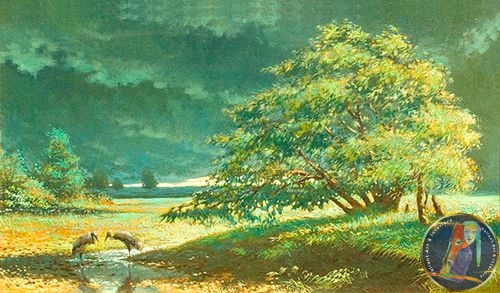
This intimate work by Olzbaatar Tserendorj, rendered in oil on canvas, is a concentrated exploration of the intersection between the natural world and human perception. Despite its modest dimensions (16 x 29 cm), the painting carries a significant visual weight, utilizing a panoramic “letterbox” format that emphasizes a sweeping, albeit miniature, horizon.


Aesthetic and Style

Tserendorj operates at the fluid boundary where Nature meets Abstract Figurative expression. The work is characterized by:

  • Lyrical Abstraction: Rather than a topographic map of the Mongolian steppe, the artist uses the medium to translate the feeling of the environment. Expect gestural brushstrokes that suggest movement—perhaps the swaying of tall grass or the shifting of light across a distant mountain range.

  • Scale and Proportion: The choice of a 16 x 29 cm canvas is deliberate. It forces a “macro” perspective on the viewer, inviting a close, personal encounter. The wide aspect ratio mimics the vastness of the Mongolian landscape, even within a small physical frame, creating a paradoxical sense of “contained infinity.”

  • Materiality: Utilizing the richness of oil paint, Tserendorj likely employs a sophisticated layering technique. The “Nature” aspect of the work is often expressed through organic textures—thick, impasto applications contrasted with thin, translucent glazes that allow the underlying canvas grain to peak through, suggesting the raw, unrefined beauty of the earth.

Thematic Interpretation

As an “Abstract Figurative” piece, the subject matter is recognizable yet elusive. Tserendorj often treats the landscape as a living entity.

  • The Figurative Element: The “figure” in this context may not be a human form, but rather the personification of natural elements. A solitary stroke might represent a lone tree or a distant figure on horseback, serving as a focal point that anchors the surrounding abstract washes of color.

  • Color Narrative: Given Tserendorj’s typical palette, the work likely balances the vibrant, high-contrast blues of the “Eternal Blue Sky” with the subtle, shifting neutrals of the desert and plains.

A Masterpiece of Boundless Serenity

 This evocative oil on canvas serves as a window into the soul of the Mongolian wilderness. Gundsambuu’s brushwork masterfully captures the ethereal transition of light across an endless horizon, where the rolling steppe meets a soft, sprawling sky. The painting’s true power lies in its profound sense of scale and silence; the solitary figures of horses are rendered not just as subjects, but as symbols of freedom and the enduring spirit of the nomadic landscape. With a rich, earthy palette and a sophisticated play of atmospheric perspective, Steppe Horse 2 is an investment in tranquility, bringing a sophisticated, contemplative energy to any modern interior. It is a rare blend of traditional heritage and contemporary minimalist aesthetic.

About Artist
Ariunbold Gundsambuu is a distinguished contemporary painter born in 1984 in the Tuv-Aimag province of Mongolia. His work is deeply rooted in the vast, open landscapes of his homeland, often utilizing the rich, expressive medium of oil on canvas to bring his visions to life. Gundsambuu is celebrated for his ability to translate the quiet majesty of the Mongolian steppe into a modern visual language, capturing both the physical scale and the spiritual essence of the region with remarkable technical precision.
  • Olzbaatar Tserendorj
  • Abstract, Figurative, Nature
  • Oil On Canvas
  • OLZ44/003
  • 16 x 29cm
  • Mongolian Art Gallery

Add Your Comment

Mongolian Art Gallery © 2025. All Rights Reserved
Privacy Policy / Terms of Use

This intimate work by Olzbaatar Tserendorj, rendered in oil on canvas, is a concentrated exploration of the intersection between the natural world and human perception. Despite its modest dimensions (16 x 29 cm), the painting carries a significant visual weight, utilizing a panoramic “letterbox” format that emphasizes a sweeping, albeit miniature, horizon.


Aesthetic and Style

Tserendorj operates at the fluid boundary where Nature meets Abstract Figurative expression. The work is characterized by:

  • Lyrical Abstraction: Rather than a topographic map of the Mongolian steppe, the artist uses the medium to translate the feeling of the environment. Expect gestural brushstrokes that suggest movement—perhaps the swaying of tall grass or the shifting of light across a distant mountain range.

  • Scale and Proportion: The choice of a 16 x 29 cm canvas is deliberate. It forces a “macro” perspective on the viewer, inviting a close, personal encounter. The wide aspect ratio mimics the vastness of the Mongolian landscape, even within a small physical frame, creating a paradoxical sense of “contained infinity.”

  • Materiality: Utilizing the richness of oil paint, Tserendorj likely employs a sophisticated layering technique. The “Nature” aspect of the work is often expressed through organic textures—thick, impasto applications contrasted with thin, translucent glazes that allow the underlying canvas grain to peak through, suggesting the raw, unrefined beauty of the earth.

Thematic Interpretation

As an “Abstract Figurative” piece, the subject matter is recognizable yet elusive. Tserendorj often treats the landscape as a living entity.

  • The Figurative Element: The “figure” in this context may not be a human form, but rather the personification of natural elements. A solitary stroke might represent a lone tree or a distant figure on horseback, serving as a focal point that anchors the surrounding abstract washes of color.

  • Color Narrative: Given Tserendorj’s typical palette, the work likely balances the vibrant, high-contrast blues of the “Eternal Blue Sky” with the subtle, shifting neutrals of the desert and plains.

A Masterpiece of Boundless Serenity

 This evocative oil on canvas serves as a window into the soul of the Mongolian wilderness. Gundsambuu’s brushwork masterfully captures the ethereal transition of light across an endless horizon, where the rolling steppe meets a soft, sprawling sky. The painting’s true power lies in its profound sense of scale and silence; the solitary figures of horses are rendered not just as subjects, but as symbols of freedom and the enduring spirit of the nomadic landscape. With a rich, earthy palette and a sophisticated play of atmospheric perspective, Steppe Horse 2 is an investment in tranquility, bringing a sophisticated, contemplative energy to any modern interior. It is a rare blend of traditional heritage and contemporary minimalist aesthetic.

About Artist
Ariunbold Gundsambuu is a distinguished contemporary painter born in 1984 in the Tuv-Aimag province of Mongolia. His work is deeply rooted in the vast, open landscapes of his homeland, often utilizing the rich, expressive medium of oil on canvas to bring his visions to life. Gundsambuu is celebrated for his ability to translate the quiet majesty of the Mongolian steppe into a modern visual language, capturing both the physical scale and the spiritual essence of the region with remarkable technical precision.