
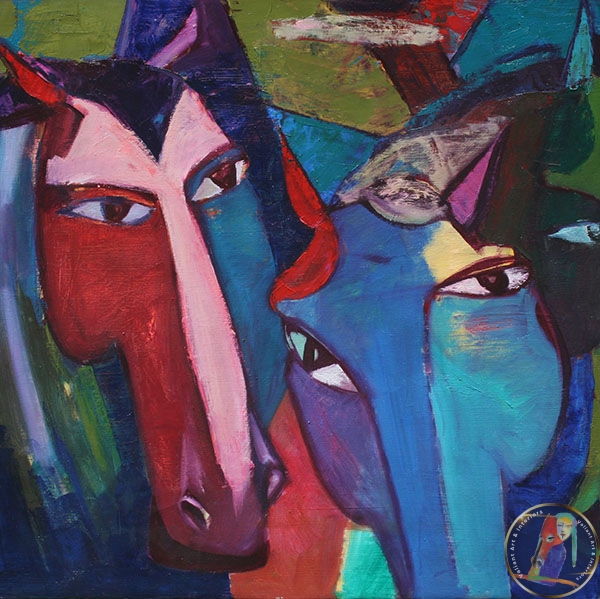
“Horse Head 1” is a powerful contemporary oil painting presented on a perfectly square, 80 x 80 cm canvas. The composition features a tight, intimate, and dramatic close-up of a horse’s head, focusing heavily on its expressive features and anatomical form. By cropping the image closely around the head, the artist eliminates any distracting background elements, forcing the viewer into an immediate, emotional encounter with the animal.
The horse is positioned at a dynamic angle, capturing the raw energy, strength, and spiritual significance that horses hold in Mongolian culture. The focus is trained on the texture of the coat, the definition of the muscles, and the soulful depth of the horse’s eye, bridging traditional Mongolian equestrian reverence with modern artistic expression.
Color Palette and Light
The color scheme is sophisticated and deeply evocative, utilizing rich oil pigments to create depth. Enkhbat employs a mix of earthy tones—deep browns, chestnuts, and warm ochres—contrasted against cooler undertones or dramatic highlights to give the form shape and weight.
The lighting is directional and intense, reminiscent of chiaroscuro, casting deep shadows across the contours of the horse’s face while brilliantly illuminating the bridge of the nose, the curve of the jaw, and the fine hairs of the mane. This high contrast accentuates the musculature and gives the painting a sculptural, three-dimensional quality.
Brushwork and Texture
The execution demonstrates a masterful control of oil paint. The brushwork is highly dynamic, alternating between smooth, blended strokes that capture the sleek satin sheen of the horse’s skin, and thick, textured, painterly strokes (impasto) to depict the wild, kinetic energy of the mane. Every stroke follows the natural contours of the horse’s anatomy, emphasizing the underlying skeletal structure and the tension in its muscles. The tactile quality of the canvas is palpable, making the subject feel vibrant, breathing, and alive.
Atmosphere and Presence
The painting carries an air of majestic solitude and intense vitality. It does not merely depict an animal; it captures the psychological presence of the horse. Having been exhibited at prestigious global venues like the Carrousel Du Louvre and the International Equestrian Festival in Kentucky, the artwork stands as a universal yet deeply personal testament to the beauty, power, and enduring spirit of the horse.