Yatgiin Egshig

Sainkhuu Enkhbat , 2005 , Oil On Canvas

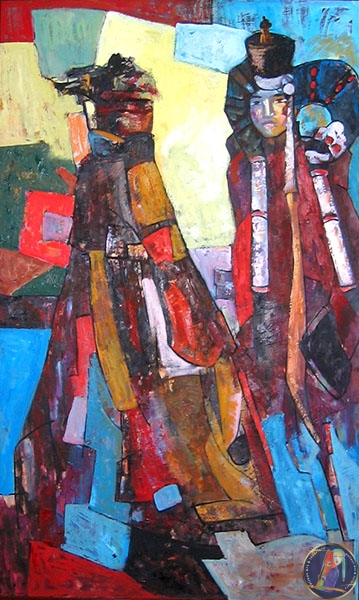
Yatgiin Egshig (translated from Mongolian as “Melody of the Yatga”) is a sweeping, large-scale oil painting that masterfully fuses traditional Mongolian iconography with a dynamic, semi-abstract contemporary style. Spanning an expansive 120 by 200 centimeters, the horizontal canvas captures a visceral sense of movement, sound, and cultural heritage, deeply rooted in the nomadic spirit of the artist’s homeland.

Composition and Subject Matter

The central focus of the painting is a stylized, evocative depiction of a musician playing the yatga—the traditional Mongolian plucked zither. Rather than a rigid, photorealistic portrait, the figure and the instrument are rendered with fluid, sweeping brushstrokes that blur the line between the physical form of the performer and the music they create.

Echoing the artist’s celebrated fascination with equine subjects—which famously caught international attention at the 2010 International Equestrian Festival in Kentucky—the silhouettes of galloping horses subtly emerge from and dissolve back into the background. The horses represent the rhythmic pulse of the steppe, conceptually intertwining the cadence of hoofbeats with the plucking of the zither strings.

The composition utilizes a strong diagonal flow, guiding the viewer’s eye from the intricate details of the instrument’s bridge across the canvas, mimicking the horizontal expanse of the Mongolian grasslands.

Color Palette and Light

Enkhbat employs a rich, atmospheric color palette that balances deep, earthy tones with sudden bursts of vibrant color:

  • Dominant Tones: Warm ochres, deep umbers, and burnt sienna dominate the canvas, evoking the vast, sun-baked landscape of the Central Asian steppe and the natural wood of the yatga.

  • Accents: Dramatic slashes of brilliant ultramarine blue and crimson red cut through the earth tones, symbolizing the eternal blue sky (Tenger) and the vivid textures of traditional Mongolian dress (deel).

  • Light: The lighting is dramatic and chiaroscuro-like. A brilliant, diffused light source appears to emanate from the center of the canvas—as if the music itself is radiating energy—casting long, expressive shadows and illuminating the textured layers of paint.

Texture and Technique

The physical execution of the painting is highly tactile. Enkhbat utilizes heavy impasto techniques, applying the oil paint in thick, deliberate layers with both brushes and palette knives. This creates a deeply textured surface where the physical ridges of the paint catch the light, adding a three-dimensional quality to the canvas.

In contrast to the heavy impasto, certain areas feature thin, translucent glazes where the paint has been allowed to drip and run, suggesting the ephemeral nature of sound fading into the wind. The visible, energetic brushwork conveys a powerful sense of immediacy, as if the artist was capturing a fleeting live performance.

Mood and Interpretation

Yatgiin Egshig is a sensory experience translated into visual art. It captures the profound solitude and immense scale of Mongolia’s landscape, while simultaneously celebrating the warmth and vitality of its artistic traditions. The painting does not merely depict a person playing an instrument; it visualizes the music itself—honoring how sound connects the human spirit to the earth, the sky, and the ancestral rhythms of the nomadic life.
  • Sainkhuu Enkhbat
  • Ulaanbaatar, Mongolia
  • Abstract, Figurative, Minimalist, Modern/Contemporary, Nude
  • Oil on canvas
  • SAI56/007
  • 120 x 200cm42" x 78"
  • Valiant Art & Interiors

Add Your Comment

Mongolian Art Gallery © 2025. All Rights Reserved
Privacy Policy / Terms of Use

Yatgiin Egshig (translated from Mongolian as “Melody of the Yatga”) is a sweeping, large-scale oil painting that masterfully fuses traditional Mongolian iconography with a dynamic, semi-abstract contemporary style. Spanning an expansive 120 by 200 centimeters, the horizontal canvas captures a visceral sense of movement, sound, and cultural heritage, deeply rooted in the nomadic spirit of the artist’s homeland.

Composition and Subject Matter

The central focus of the painting is a stylized, evocative depiction of a musician playing the yatga—the traditional Mongolian plucked zither. Rather than a rigid, photorealistic portrait, the figure and the instrument are rendered with fluid, sweeping brushstrokes that blur the line between the physical form of the performer and the music they create.

Echoing the artist’s celebrated fascination with equine subjects—which famously caught international attention at the 2010 International Equestrian Festival in Kentucky—the silhouettes of galloping horses subtly emerge from and dissolve back into the background. The horses represent the rhythmic pulse of the steppe, conceptually intertwining the cadence of hoofbeats with the plucking of the zither strings.

The composition utilizes a strong diagonal flow, guiding the viewer’s eye from the intricate details of the instrument’s bridge across the canvas, mimicking the horizontal expanse of the Mongolian grasslands.

Color Palette and Light

Enkhbat employs a rich, atmospheric color palette that balances deep, earthy tones with sudden bursts of vibrant color:

  • Dominant Tones: Warm ochres, deep umbers, and burnt sienna dominate the canvas, evoking the vast, sun-baked landscape of the Central Asian steppe and the natural wood of the yatga.

  • Accents: Dramatic slashes of brilliant ultramarine blue and crimson red cut through the earth tones, symbolizing the eternal blue sky (Tenger) and the vivid textures of traditional Mongolian dress (deel).

  • Light: The lighting is dramatic and chiaroscuro-like. A brilliant, diffused light source appears to emanate from the center of the canvas—as if the music itself is radiating energy—casting long, expressive shadows and illuminating the textured layers of paint.

Texture and Technique

The physical execution of the painting is highly tactile. Enkhbat utilizes heavy impasto techniques, applying the oil paint in thick, deliberate layers with both brushes and palette knives. This creates a deeply textured surface where the physical ridges of the paint catch the light, adding a three-dimensional quality to the canvas.

In contrast to the heavy impasto, certain areas feature thin, translucent glazes where the paint has been allowed to drip and run, suggesting the ephemeral nature of sound fading into the wind. The visible, energetic brushwork conveys a powerful sense of immediacy, as if the artist was capturing a fleeting live performance.

Mood and Interpretation

Yatgiin Egshig is a sensory experience translated into visual art. It captures the profound solitude and immense scale of Mongolia’s landscape, while simultaneously celebrating the warmth and vitality of its artistic traditions. The painting does not merely depict a person playing an instrument; it visualizes the music itself—honoring how sound connects the human spirit to the earth, the sky, and the ancestral rhythms of the nomadic life.