
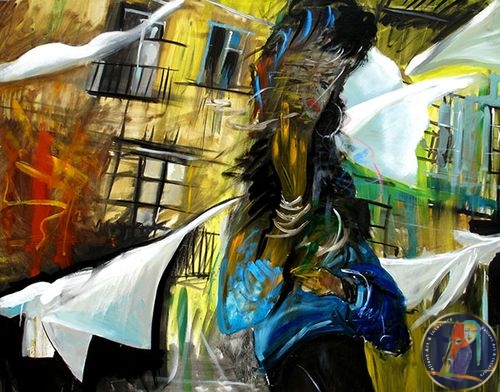
Emegtei

Odgerel Tsulbaatar , 2007 , Oil On Canvas

The painting “Emegtei” (which translates from Mongolian to “Woman”) is a striking example of Odgerel Tsulbaatar’s ability to weave traditional Mongolian identity into a contemporary, figurative framework. Created in 2007, this large-scale oil on canvas serves as an intimate yet monumental exploration of the female form and spirit.

Composition and Subject Matter

The artwork features a central female figure, rendered with a blend of figurative realism and modern abstraction. Tsulbaatar utilizes the 100 x 120 cm space to emphasize the presence of the subject, often placing her in a contemplative or dignified posture that reflects the strength inherent in Mongolian womanhood.

The title itself suggests a universal tribute, yet the execution is deeply personal. The figure is not merely a portrait but a vessel for cultural symbols. You may notice:

  • Stylized Form: The artist often simplifies the physical lines of the body, leaning into his “Modern/Contemporary” style to focus on the silhouette and the “feel” of the subject rather than anatomical perfection.

  • Cultural Elements: Subtle nods to Mongolian heritage—such as the suggestion of traditional jewelry, a high-collared deel, or specific hair arrangements—are often integrated into the brushwork, grounding the contemporary style in historical roots.

Color Palette and Technique

Consistent with his “Seeking the Real Feel” philosophy, Tsulbaatar uses color to evoke emotion rather than just to describe light.

  • Earth Tones and Vibrancy: The palette likely balances the muted, earthy tones of the Mongolian steppe with sudden, vibrant bursts of color that highlight the subject’s face or traditional attire.

  • Texture: As an oil painting, “Emegtei” benefits from rich, layered textures. The background is often treated with an abstract touch, using broad, expressive brushstrokes that create a sense of atmospheric depth, ensuring the figure remains the undisputed focal point.
  • Odgerel Tsulbaatar
  • Calligraphy, Figurative
  • Oil On Canvas
  • ODG43/022
  • 100 x 120cm
  • Mongolian Art Gallery

Add Your Comment

Mongolian Art Gallery © 2025. All Rights Reserved
Privacy Policy / Terms of Use

The painting “Emegtei” (which translates from Mongolian to “Woman”) is a striking example of Odgerel Tsulbaatar’s ability to weave traditional Mongolian identity into a contemporary, figurative framework. Created in 2007, this large-scale oil on canvas serves as an intimate yet monumental exploration of the female form and spirit.

Composition and Subject Matter

The artwork features a central female figure, rendered with a blend of figurative realism and modern abstraction. Tsulbaatar utilizes the 100 x 120 cm space to emphasize the presence of the subject, often placing her in a contemplative or dignified posture that reflects the strength inherent in Mongolian womanhood.

The title itself suggests a universal tribute, yet the execution is deeply personal. The figure is not merely a portrait but a vessel for cultural symbols. You may notice:

  • Stylized Form: The artist often simplifies the physical lines of the body, leaning into his “Modern/Contemporary” style to focus on the silhouette and the “feel” of the subject rather than anatomical perfection.

  • Cultural Elements: Subtle nods to Mongolian heritage—such as the suggestion of traditional jewelry, a high-collared deel, or specific hair arrangements—are often integrated into the brushwork, grounding the contemporary style in historical roots.

Color Palette and Technique

Consistent with his “Seeking the Real Feel” philosophy, Tsulbaatar uses color to evoke emotion rather than just to describe light.

  • Earth Tones and Vibrancy: The palette likely balances the muted, earthy tones of the Mongolian steppe with sudden, vibrant bursts of color that highlight the subject’s face or traditional attire.

  • Texture: As an oil painting, “Emegtei” benefits from rich, layered textures. The background is often treated with an abstract touch, using broad, expressive brushstrokes that create a sense of atmospheric depth, ensuring the figure remains the undisputed focal point.