
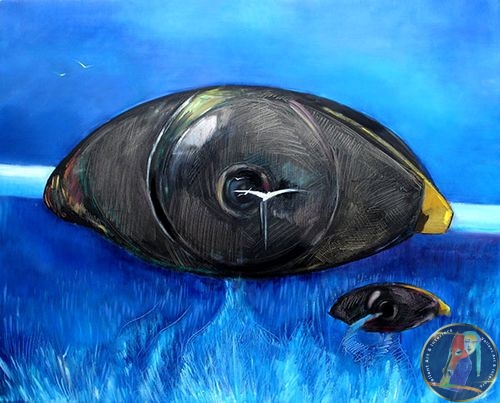
In Derelict People, Odgerel Tsulbaatar utilizes a masterful blend of figurative realism and contemporary abstraction to capture a poignant social narrative. The 80 x 100 cm canvas provides a wide, cinematic field that emphasizes the physical and emotional space between the subjects.
The painting depicts a group of individuals caught in a moment of stillness. Consistent with Tsulbaatar’s modern style, the figures are not rendered with sharp, photographic precision; instead, they are built through expressive, sometimes heavy brushstrokes that suggest a sense of weariness and grit. The “derelict” nature of the subjects is conveyed through their slumped postures, tattered textures in their clothing, and a color palette dominated by earthy, muted tones—ochres, deep umbers, and slate grays—interspersed with stark, cold highlights.
Atmosphere and Technique
The background is treated with an abstract sensibility, blurring the lines between a specific Mongolian urban setting and a universal space of displacement. This “seeking the real feel” (a theme evident in the artist’s 2006 exhibition history) is achieved through:
Textural Layering: The oil paint is applied with varying thickness, creating a tactile surface that mirrors the harsh reality of the subjects’ lives.
Light and Shadow: Dramatic contrast is used to pull the figures out of the gloom, highlighting facial expressions that suggest resignation, resilience, or deep introspection.
Spatial Arrangement: The composition feels intentionally unbalanced, reflecting the instability of the lives portrayed.
Context and Significance
Created just two years after Tsulbaatar graduated from the Fine Art University in Ulaanbaatar, this work represents a critical period in the artist’s career. It stands as a bridge between his academic training and his emergence as a voice in the “New Art” movement of Mongolia.
By focusing on the “derelict,” Tsulbaatar moves away from traditional nomadic romanticism often found in Mongolian art, choosing instead to confront the modern, urban complexities of the 21st century. The painting serves as a powerful portrait of the human condition, capturing a specific demographic of Ulaanbaatar’s post-transition society with profound empathy and modern aesthetic vigor.