2 Women With Baby

Munkhjin Tsultem , 2003 , Oil On Canvas

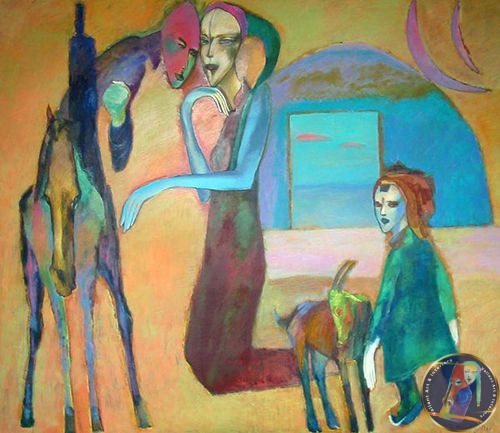
In this expansive figurative work, Munkhjin Tsultem presents a poignant, intimate scene that bridges the gap between traditional Mongolian maternal themes and a refined modern aesthetic. The painting features two women positioned in a close, protective formation around a small infant.

The composition is characterized by its monumentality; at 130 x 150 cm, the figures are nearly life-sized, filling the frame with a sense of weight and importance. The arrangement of the bodies creates a circular, rhythmic flow that draws the viewer’s eye toward the central focal point—the baby—emphasizing themes of lineage, care, and the communal nature of motherhood in Mongolian culture.

Style and Technique

Drawing from his rigorous training at the Stroganoff Institute of Art and Design, Tsultem employs a sophisticated use of oil that balances academic precision with contemporary expression.

  • Form: The figures are rendered with a “Modern Figurative” approach. While their anatomical structure is grounded in reality, there is a subtle stylization—an elongation of line and a softening of edges—that elevates the scene from a simple portrait to a timeless allegory.

  • Color Palette: The 2003 piece typically utilizes the artist’s signature palette of earthy, grounded tones interspersed with vibrant, symbolic hues. Deep ochres, warm terracottas, and muted blues likely dominate the canvas, reflecting the natural landscapes of Mongolia and the organic textures of traditional textiles.

  • Texture: The brushwork is deliberate. Tsultem often uses layers of glaze and visible strokes to create a tactile surface that suggests the warmth of skin and the heavy drape of fabric, adding a sensory dimension to the visual experience.

Cultural Significance

As a prominent figure in Mongolian contemporary art, Tsultem uses this piece to explore the matriarchal strength inherent in his heritage. The presence of two women—often interpreted as a mother and a grandmother or two sisters—highlights the “extended family” structure.

The painting transcends mere documentation of nomadic life; it is a celebration of the quiet, domestic moments that sustain a culture. By blending the Moscow-influenced “Big Style” of painting with nomadic sensibilities, 2 Women With Baby stands as a definitive example of how Tsultem modernized Mongolian art for an international stage.
  • Munkhjin Tsultem
  • Figurative, Minimalist
  • Oil On Canvas
  • MUN35/002
  • 130 x 150cm
  • Mongolian Art Gallery

Add Your Comment

Mongolian Art Gallery © 2025. All Rights Reserved
Privacy Policy / Terms of Use

In this expansive figurative work, Munkhjin Tsultem presents a poignant, intimate scene that bridges the gap between traditional Mongolian maternal themes and a refined modern aesthetic. The painting features two women positioned in a close, protective formation around a small infant.

The composition is characterized by its monumentality; at 130 x 150 cm, the figures are nearly life-sized, filling the frame with a sense of weight and importance. The arrangement of the bodies creates a circular, rhythmic flow that draws the viewer’s eye toward the central focal point—the baby—emphasizing themes of lineage, care, and the communal nature of motherhood in Mongolian culture.

Style and Technique

Drawing from his rigorous training at the Stroganoff Institute of Art and Design, Tsultem employs a sophisticated use of oil that balances academic precision with contemporary expression.

  • Form: The figures are rendered with a “Modern Figurative” approach. While their anatomical structure is grounded in reality, there is a subtle stylization—an elongation of line and a softening of edges—that elevates the scene from a simple portrait to a timeless allegory.

  • Color Palette: The 2003 piece typically utilizes the artist’s signature palette of earthy, grounded tones interspersed with vibrant, symbolic hues. Deep ochres, warm terracottas, and muted blues likely dominate the canvas, reflecting the natural landscapes of Mongolia and the organic textures of traditional textiles.

  • Texture: The brushwork is deliberate. Tsultem often uses layers of glaze and visible strokes to create a tactile surface that suggests the warmth of skin and the heavy drape of fabric, adding a sensory dimension to the visual experience.

Cultural Significance

As a prominent figure in Mongolian contemporary art, Tsultem uses this piece to explore the matriarchal strength inherent in his heritage. The presence of two women—often interpreted as a mother and a grandmother or two sisters—highlights the “extended family” structure.

The painting transcends mere documentation of nomadic life; it is a celebration of the quiet, domestic moments that sustain a culture. By blending the Moscow-influenced “Big Style” of painting with nomadic sensibilities, 2 Women With Baby stands as a definitive example of how Tsultem modernized Mongolian art for an international stage.