Windows

Ganbold / Bono Dorjderem , 2008 , Oil On Canvas

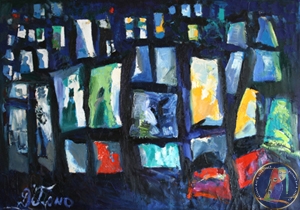
Windows is a compelling large-scale oil painting by Mongolian contemporary artist Ganbold (Bono Dorjderem). Measuring 90 by 130 centimeters, the composition uses the rich, malleable texture of oil on canvas to explore a complex intersection of space, light, and architectural geometry. The painting deftly balances representation with abstract modernism, a signature style that marked the artist’s prominent exhibition era between 2008 and 2009.

Composition and Subject Matter

The focal point of the artwork centers on the concept of the “window” as both a physical architectural element and a psychological portal. Rather than a singular, traditional view, the canvas presents a fractured or multi-layered arrangement of windows.

  • The Grid and Geometry: The composition is structured around strong structural lines, creating a grid-like network of frames, panes, and intersecting planes. Some windows open up to hint at vast, sweeping horizons reminiscent of the Mongolian steppe, while others look inward, reflecting domestic intimacy or abstract patterns of color.

  • Spatial Depth: Dorjderem manipulates perspective masterfully. There is a deliberate ambiguity between what is inside and what is outside. Multiple vantage points coexist on the single 90 x 130 cm surface, inviting the viewer to look through, at, and beyond the canvas simultaneously.

Color Palette and Light

The color theory applied in Windows showcases the artist’s formal training and distinct cultural background:

  • The Palette: The canvas features a sophisticated interplay of earthy, grounded tones—deep ochres, raw umbers, and structural grays—juxtaposed against sudden, vibrant bursts of luminous blues, warm ambers, and stark whites that simulate light streaming through glass.

  • Chiaroscuro and Reflection: The oil medium is applied with varying density, from translucent glazes that mimic the sheen of reflective glass to thick, impasto strokes that give the window frames a heavy, tactile presence. Light operates as a dynamic force in the painting, filtering through panes, casting geometric shadows, and illuminating hidden corners of the composition.

Style and Emotional Resonance

Created during a highly prolific period for the artist—framed by his 2008 “Bono art” debut and his showcase at Art Ireland in 2009—Windows bridges European modernist abstraction with a distinctly Mongolian sense of space and isolation.

The painting carries a profound atmospheric weight. It speaks to themes of perception, the boundaries between private thoughts and the public world, and the human desire to look beyond our immediate confines. The large horizontal format expansively pulls the viewer into its quiet, contemplative atmosphere, making Windows a monumental exploration of sight, memory, and structural harmony.
  • Ganbold / Bono Dorjderem
  • Ulaanbaatar, Mongolia
  • Abstract, Figurative, Modern/Contemporary, Nude
  • Oil On Canvas
  • GND81/066
  • 90 x 130cm31" x "
  • Valiant Art & Interiors

Add Your Comment

Mongolian Art Gallery © 2025. All Rights Reserved
Privacy Policy / Terms of Use

Windows is a compelling large-scale oil painting by Mongolian contemporary artist Ganbold (Bono Dorjderem). Measuring 90 by 130 centimeters, the composition uses the rich, malleable texture of oil on canvas to explore a complex intersection of space, light, and architectural geometry. The painting deftly balances representation with abstract modernism, a signature style that marked the artist’s prominent exhibition era between 2008 and 2009.

Composition and Subject Matter

The focal point of the artwork centers on the concept of the “window” as both a physical architectural element and a psychological portal. Rather than a singular, traditional view, the canvas presents a fractured or multi-layered arrangement of windows.

  • The Grid and Geometry: The composition is structured around strong structural lines, creating a grid-like network of frames, panes, and intersecting planes. Some windows open up to hint at vast, sweeping horizons reminiscent of the Mongolian steppe, while others look inward, reflecting domestic intimacy or abstract patterns of color.

  • Spatial Depth: Dorjderem manipulates perspective masterfully. There is a deliberate ambiguity between what is inside and what is outside. Multiple vantage points coexist on the single 90 x 130 cm surface, inviting the viewer to look through, at, and beyond the canvas simultaneously.

Color Palette and Light

The color theory applied in Windows showcases the artist’s formal training and distinct cultural background:

  • The Palette: The canvas features a sophisticated interplay of earthy, grounded tones—deep ochres, raw umbers, and structural grays—juxtaposed against sudden, vibrant bursts of luminous blues, warm ambers, and stark whites that simulate light streaming through glass.

  • Chiaroscuro and Reflection: The oil medium is applied with varying density, from translucent glazes that mimic the sheen of reflective glass to thick, impasto strokes that give the window frames a heavy, tactile presence. Light operates as a dynamic force in the painting, filtering through panes, casting geometric shadows, and illuminating hidden corners of the composition.

Style and Emotional Resonance

Created during a highly prolific period for the artist—framed by his 2008 “Bono art” debut and his showcase at Art Ireland in 2009—Windows bridges European modernist abstraction with a distinctly Mongolian sense of space and isolation.

The painting carries a profound atmospheric weight. It speaks to themes of perception, the boundaries between private thoughts and the public world, and the human desire to look beyond our immediate confines. The large horizontal format expansively pulls the viewer into its quiet, contemplative atmosphere, making Windows a monumental exploration of sight, memory, and structural harmony.