
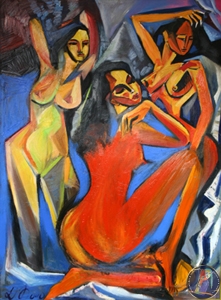
Naked is a compelling exploration of the human form that sits at the intersection of Contemporary Figurative art and Expressive Abstraction. Executed on a substantial 100 x 130 cm canvas, the scale of the work allows for a visceral, immersive experience of the subject matter. Bono utilizes the versatility of oil paint to create a surface rich in texture and emotional depth, moving away from traditional academic realism toward a more psychological representation of the body.
Composition and Style
The painting reflects the artist’s signature synthesis of Mongolian modernism and international contemporary trends.
The Figure: The “Nude” subject is treated not as a static object of beauty, but as a fluid, lived-in entity. The lines of the body are often blurred or merged with the surrounding space, suggesting a vulnerability and a dissolution of boundaries between the self and the environment.
Abstract Elements: While the figurative essence remains central, large passages of the canvas lean into abstraction. Bold brushstrokes and perhaps the use of a palette knife create a sense of movement and “unfinished” energy, inviting the viewer to complete the forms mentally.
Color Palette: Typical of Bono’s work from this period (notably following his Freedom and Aphorizm in art exhibitions), the color story likely balances earthy, grounded tones with sudden, emotive bursts of color to highlight the warmth of skin or the coldness of shadows.
Artistic Context
As an artist who emerged during Mongolia’s transition into a more globalized art scene, Bono’s Naked serves as a bridge between internal reflection and external expression. Having exhibited in major hubs like Beijing and Shanghai, his work carries a sophisticated understanding of spatial dynamics.
In this specific piece, the title Naked transcends physical undress. It points toward a state of existential exposure. The large format ensures that the anatomical curves and the tactile quality of the oil paint confront the viewer, demanding a recognition of the raw, unadorned human condition.
Note on the Artist: Ganbold (Bono) Dorjderem is a significant figure in the post-1990s generation of Mongolian artists. His work is characterized by a departure from socialist realism toward a personal, “aphoristic” style that prioritizes the freedom of the mark and the honesty of the human figure.