
Lady In Red

Ganbold / Bono Dorjderem , 2008 , Oil On Canvas

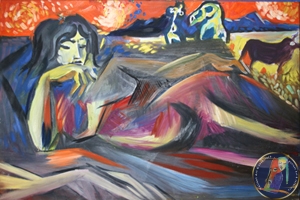
Lady in Red is a compelling Oil on Canvas work measuring 50 x 70cm. Created by the contemporary Mongolian artist Ganbold (widely known as Bono), the piece is a sophisticated intersection of Modern Abstract and Figurative Nude styles. True to Bono’s signature approach, the painting prioritizes emotional resonance and fluidity over rigid realism, utilizing a vibrant palette to explore the female form.

Composition and Style

The composition centers on a solitary female figure, rendered with the expressive, gestural brushwork typical of Bono’s mid-2000s “Freedom” era.

  • The Subject: The “Lady” is depicted in a state of repose or introspection. While the anatomy is grounded in Figurative accuracy, the artist employs Abstract techniques to blur the boundaries between the subject and her environment.

  • Color Palette: As the title suggests, the painting is dominated by a spectrum of reds—ranging from deep, earthy madders to bright, fiery vermilions. These tones are often contrasted against cooler, muted undertones to create a sense of depth and three-dimensionality.

  • Texture and Form: The use of oil paint allows for a rich, tactile surface. Bono utilizes light and shadow not just to define the body, but to evoke a specific mood—one that balances the boldness of the color red with the vulnerability of the nude subject.

Artistic Context

Produced by an artist who gained international recognition through exhibitions in Beijing and Shanghai, Lady in Red reflects a pivotal moment in Mongolian contemporary art. Following his 2007 solo exhibitions, Aphorizm in Art and Freedom, this work demonstrates Bono’s departure from traditional socialist realism toward a more liberated, individualistic expression.

The painting serves as a testament to the artist’s ability to translate the human condition through a lens of modern abstraction, making it a standout piece within his early career catalog.
  • Ganbold / Bono Dorjderem
  • Ulaanbaatar, Mongolia
  • Abstract, Figurative, Modern/Contemporary, Nude
  • Oil On Canvas
  • GND81/058
  • 50 x 70cm19" x "
  • Valiant Art & Interiors

Add Your Comment

Mongolian Art Gallery © 2025. All Rights Reserved
Privacy Policy / Terms of Use

Lady in Red is a compelling Oil on Canvas work measuring 50 x 70cm. Created by the contemporary Mongolian artist Ganbold (widely known as Bono), the piece is a sophisticated intersection of Modern Abstract and Figurative Nude styles. True to Bono’s signature approach, the painting prioritizes emotional resonance and fluidity over rigid realism, utilizing a vibrant palette to explore the female form.

Composition and Style

The composition centers on a solitary female figure, rendered with the expressive, gestural brushwork typical of Bono’s mid-2000s “Freedom” era.

  • The Subject: The “Lady” is depicted in a state of repose or introspection. While the anatomy is grounded in Figurative accuracy, the artist employs Abstract techniques to blur the boundaries between the subject and her environment.

  • Color Palette: As the title suggests, the painting is dominated by a spectrum of reds—ranging from deep, earthy madders to bright, fiery vermilions. These tones are often contrasted against cooler, muted undertones to create a sense of depth and three-dimensionality.

  • Texture and Form: The use of oil paint allows for a rich, tactile surface. Bono utilizes light and shadow not just to define the body, but to evoke a specific mood—one that balances the boldness of the color red with the vulnerability of the nude subject.

Artistic Context

Produced by an artist who gained international recognition through exhibitions in Beijing and Shanghai, Lady in Red reflects a pivotal moment in Mongolian contemporary art. Following his 2007 solo exhibitions, Aphorizm in Art and Freedom, this work demonstrates Bono’s departure from traditional socialist realism toward a more liberated, individualistic expression.

The painting serves as a testament to the artist’s ability to translate the human condition through a lens of modern abstraction, making it a standout piece within his early career catalog.