Peacock

Munkhtsetseg Jalkhaajav , 2006 , Oil On Canvas

Artwork Description: Peacock (2006)

Artist: Munkhtsetseg Jalkhaajav (Mugi)

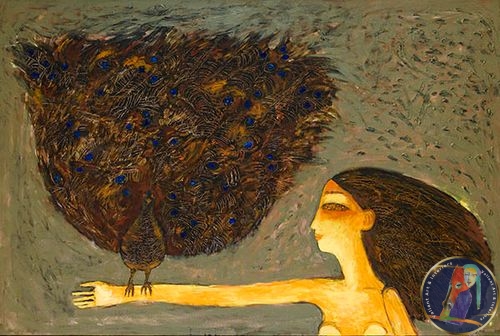
In this expansive oil-on-canvas work, measuring 100 x 150cm, Munkhtsetseg Jalkhaajav (widely known as Mugi) bridges the gap between contemporary figurative art and a deeply spiritual abstract modernism. Though titled Peacock, the painting eschews a literal depiction of the bird in favor of a psychological and visceral exploration of form, color, and symbolic weight.

Visual Composition and Style

The painting is characterized by the artist’s signature fusion of Mongolian traditional motifs and the raw, expressive techniques she honed during her studies in Minsk.

  • Color Palette: The canvas is dominated by rich, saturated tones. Rather than the expected bright greens and blues of a peacock, Mugi often utilizes earthy ochres, deep crimsons, and ethereal teals that feel ancient yet modern.

  • The Subject: The “peacock” is rendered through a stylized, almost skeletal elegance. The bird’s plumage is often interpreted through layered, translucent glazes of oil paint, creating a textured surface that suggests feathers, skin, and spirit all at once.

  • Form: Influenced by her interest in the female body and the healing arts, the silhouette of the bird frequently mirrors human anatomy. The neck of the peacock may curve with a serpentine, feminine grace, while the “eyes” of the tail feathers are treated as floating, watchful orbs—symbolizing protection or a heightened state of awareness.
  • Munkhtsetseg Jalkhaajav
  • Abstract, Calligraphy, Expressionist
  • Oil On Canvas
  • MUK37/020
  • 100 x 150cm
  • Mongolian Art Gallery

Add Your Comment

Mongolian Art Gallery © 2025. All Rights Reserved
Privacy Policy / Terms of Use

Artwork Description: Peacock (2006)

Artist: Munkhtsetseg Jalkhaajav (Mugi)

In this expansive oil-on-canvas work, measuring 100 x 150cm, Munkhtsetseg Jalkhaajav (widely known as Mugi) bridges the gap between contemporary figurative art and a deeply spiritual abstract modernism. Though titled Peacock, the painting eschews a literal depiction of the bird in favor of a psychological and visceral exploration of form, color, and symbolic weight.

Visual Composition and Style

The painting is characterized by the artist’s signature fusion of Mongolian traditional motifs and the raw, expressive techniques she honed during her studies in Minsk.

  • Color Palette: The canvas is dominated by rich, saturated tones. Rather than the expected bright greens and blues of a peacock, Mugi often utilizes earthy ochres, deep crimsons, and ethereal teals that feel ancient yet modern.

  • The Subject: The “peacock” is rendered through a stylized, almost skeletal elegance. The bird’s plumage is often interpreted through layered, translucent glazes of oil paint, creating a textured surface that suggests feathers, skin, and spirit all at once.

  • Form: Influenced by her interest in the female body and the healing arts, the silhouette of the bird frequently mirrors human anatomy. The neck of the peacock may curve with a serpentine, feminine grace, while the “eyes” of the tail feathers are treated as floating, watchful orbs—symbolizing protection or a heightened state of awareness.