

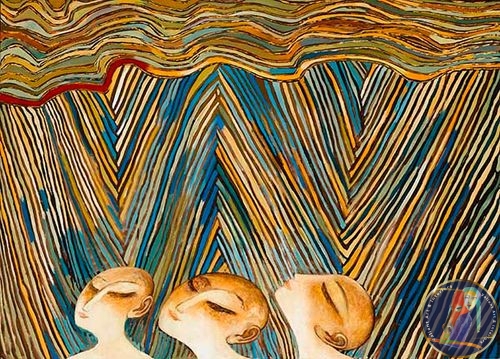
Rain is a compelling synthesis of contemporary figurative art and abstract modernism, reflecting Munkhtsetseg Jalkhaajav’s signature exploration of the female form, spirituality, and the visceral connection between the body and the environment. Painted in 2005, this large-scale oil on canvas utilizes a muted yet emotionally charged palette to evoke a sense of quietude and introspection.
Composition and Subject Matter
The painting centers on a stylized female figure, a recurring motif in Mugi’s work. Rather than a literal depiction of a storm, the “rain” is interpreted through symbolic abstraction.
The Figure: The central subject is often depicted with elongated limbs and a stoic, mask-like expression, drawing on the artist’s Mongolian roots and her interest in shamanic traditions. Her posture suggests a state of vulnerability or perhaps a ritualistic receptivity to the elements.
The Element of Water: Vertical strokes and thin, dripping applications of oil paint cascade down the canvas. These lines do not merely represent falling water; they act as a veil, blurring the boundaries between the subject’s physical body and the surrounding atmosphere.
Anatomy of Emotion: Consistent with her education in Minsk and her focus on “inner organs” and healing, the figure may feature subtle anatomical hints—vein-like patterns or shaded cavities—suggesting that the rain is washing through the soul as much as the skin.
Style and Technique
Mugi’s technique in Rain demonstrates a masterful control of oil media, balancing thick, textured passages with translucent glazes.
Color Palette: The work leans into earthy tones—ochres, deep grays, and bruised purples—interspersed with cool, watery blues. This creates a somber, meditative mood that avoids the cliches of “nature painting.”
Texture: The 120 x 150 cm surface allows for a physical presence. The artist uses the large scale to invite the viewer into a private, immersive space where the “rain” feels like a rhythmic, percussive force.
Modernist Influence: While the figure remains recognizable, the deconstruction of the background into broad, gestural shapes aligns the piece with the Abstract Modern movement, stripping away unnecessary detail to focus on raw sensation.
