
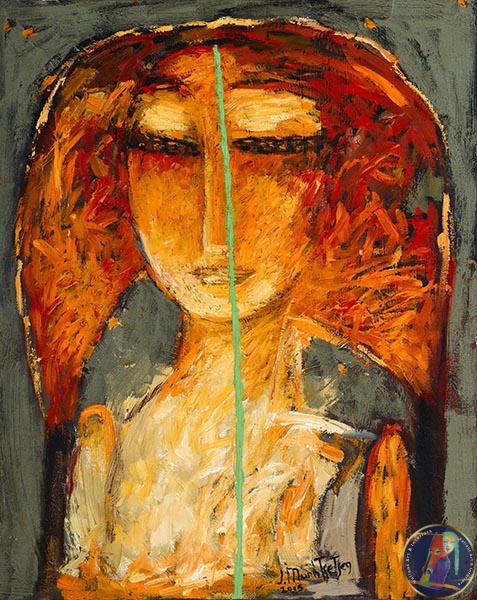
Abstraction II is a compelling oil-on-canvas work by the renowned Mongolian artist Munkhtsetseg Jalkhaajav (often known as Mugi). Measuring 50 x 40 cm, this 2005 piece serves as a bridge between the artist’s formal academic training in Minsk and her deeply personal exploration of Mongolian spiritualism and the female form.
Visual Composition and Style
While the title suggests a departure from reality, the work sits firmly within Jalkhaajav’s signature Contemporary Figurative style, where abstraction is used to distill emotion rather than obscure the subject.
Form and Silhouette: The painting likely features a centralized, ethereal figure or a series of interconnected organic shapes that evoke the human anatomy. Characteristic of her 2000s period, the forms are often elongated or fragmented, suggesting a state of metamorphosis or spiritual transition.
Color Palette: Utilizing the rich, tactile qualities of oil paint, the artist employs a palette that balances earthy, grounded tones with flashes of symbolic color. Expect deep ochres, muted reds, or translucent washes that mimic the texture of skin, parchment, or traditional Mongolian textiles.
Texture and Brushwork: The 50 x 40 cm scale allows for an intimate viewing experience. Jalkhaajav’s brushwork is typically layered; thin glazes of oil create a sense of depth and “inner light,” while more impasto strokes may define the boundaries of the abstract shapes, giving the canvas a visceral, tactile quality.
Symbolic Context
Rooted in her heritage, Abstraction II reflects the artist’s preoccupation with the unseen energy of the body. In the context of Mongolian culture, Jalkhaajav often explores themes of healing, pregnancy, and the “pulse” of life. The “abstraction” in this piece is likely a representation of the internal world—organs, spirits, or psychological states—brought to the surface of the canvas.