Abstraction Iv

Munkhtsetseg Jalkhaajav , 2005 , Oil On Canvas

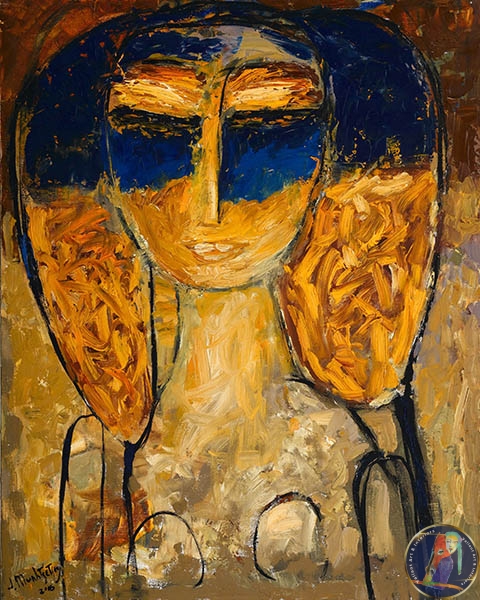
Abstraction IV is a compelling oil on canvas work by the renowned Mongolian artist Munkhtsetseg Jalkhaajav (often referred to as Mugi). Measuring 50 x 40cm, this medium-format piece serves as a sophisticated bridge between the artist’s academic training in Minsk and her deeply personal exploration of Mongolian spiritual identity.

Composition and Visual Language

Created in 2005, the painting exemplifies Jalkhaajav’s mastery of Abstract Modernism infused with Contemporary Figurative undertones. Unlike pure abstraction, the work suggests the ghost of a form—likely a silhouette or an organic structure—emerging from a layered, atmospheric background.

  • Texture and Technique: The application of oil paint is both visceral and deliberate. Jalkhaajav employs a technique of layering and scratching back into the pigment, creating a surface that feels weathered, much like an ancient thangka or a piece of parchment.

  • Color Palette: The palette is characteristic of her early 2000s period, favoring earthy, muted tones. Subdued ochres, deep umbers, and bruised greys are punctuated by subtle shifts in value that create a sense of deep, receding space.

  • Symbolic Weight: While the title suggests a departure from representation, the composition carries the “weight” of the human condition. The central forms evoke themes of healing, the female body, and the “inner life”—recurrent motifs in Jalkhaajav’s practice that reflect her interest in traditional Mongolian medicine and Buddhist philosophy.
  • Munkhtsetseg Jalkhaajav
  • Abstract, Expressionist
  • Oil On Canvas
  • MUK37/006
  • 50 x 40cm
  • Mongolian Art Gallery

Add Your Comment

Mongolian Art Gallery © 2025. All Rights Reserved
Privacy Policy / Terms of Use

Abstraction IV is a compelling oil on canvas work by the renowned Mongolian artist Munkhtsetseg Jalkhaajav (often referred to as Mugi). Measuring 50 x 40cm, this medium-format piece serves as a sophisticated bridge between the artist’s academic training in Minsk and her deeply personal exploration of Mongolian spiritual identity.

Composition and Visual Language

Created in 2005, the painting exemplifies Jalkhaajav’s mastery of Abstract Modernism infused with Contemporary Figurative undertones. Unlike pure abstraction, the work suggests the ghost of a form—likely a silhouette or an organic structure—emerging from a layered, atmospheric background.

  • Texture and Technique: The application of oil paint is both visceral and deliberate. Jalkhaajav employs a technique of layering and scratching back into the pigment, creating a surface that feels weathered, much like an ancient thangka or a piece of parchment.

  • Color Palette: The palette is characteristic of her early 2000s period, favoring earthy, muted tones. Subdued ochres, deep umbers, and bruised greys are punctuated by subtle shifts in value that create a sense of deep, receding space.

  • Symbolic Weight: While the title suggests a departure from representation, the composition carries the “weight” of the human condition. The central forms evoke themes of healing, the female body, and the “inner life”—recurrent motifs in Jalkhaajav’s practice that reflect her interest in traditional Mongolian medicine and Buddhist philosophy.