Abstraction Vi

Munkhtsetseg Jalkhaajav , 2006 , Oil On Canvas

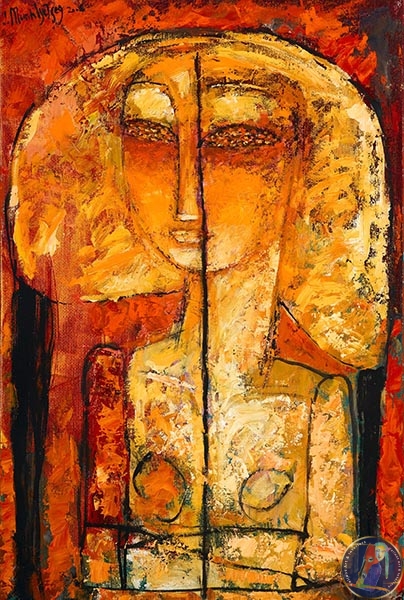
Abstraction VI is a compelling synthesis of Munkhtsetseg Jalkhaajav’s formal Russian academic training and her deeply rooted Mongolian heritage. Created in 2006, this mid-sized oil painting marks a sophisticated point in her career where the boundaries between Contemporary Figurative and Abstract Modern styles dissolve into a singular, emotive language.

Composition and Form

The work is characterized by a vertical orientation that emphasizes a sense of internal growth and spiritual ascension. Rather than depicting a literal landscape or figure, Jalkhaajav utilizes organic, fluid shapes that seem to pulse against the confines of the canvas.

  • The Central Motif: A dense, central cluster of forms serves as the painting’s anchor. These shapes evoke biological or anatomical references—reminiscent of internal organs, seeds, or embryonic silhouettes—suggesting a theme of “inner life” or “hidden energy.”

  • Spatial Depth: The artist rejects traditional perspective in favor of a layered, atmospheric depth. The forms appear to float or emerge from a hazy, ethereal background, creating a dreamlike environment that feels both ancient and modern.

Color Palette and Texture

Jalkhaajav’s use of oil paint is masterful, employing both delicate glazes and more opaque, textured applications:

  • Tonal Range: The palette is typically grounded in earthy, muted tones—ochres, deep ochre-reds, and charcoal greys—interspersed with sudden, vibrant passages of crimson or pale flesh tones. This contrast mirrors the artist’s recurring interest in the duality of pain and healing.

  • Surface Quality: There is a visible tactility to the work. The artist often uses thin, scrubbed-in layers of paint that allow the weave of the canvas to peek through, contrasted against areas of thick, gestural impasto that give the “abstract” forms a physical weight.

Style and Symbolism

While the title identifies the work as an “Abstraction,” the painting is heavily informed by Jalkhaajav’s unique feminist and shamanic lens.

  • The “Internal” Landscape: Influenced by her time in Minsk and her observations of Mongolian traditional medicine, the work functions as a map of the subconscious.

  • Cultural Synthesis: The piece bridges the gap between the rigorous Russian Academic tradition of her education and the nomadic symbolism of Mongolia. The lines are not just decorative; they feel like “threads” or “pulses,” connecting the physical body to a wider, metaphysical universe.
  • Munkhtsetseg Jalkhaajav
  • Calligraphy, Expressionist
  • Oil On Canvas
  • MUK37/001
  • 60 x 40cm
  • Mongolian Art Gallery

Add Your Comment

Mongolian Art Gallery © 2025. All Rights Reserved
Privacy Policy / Terms of Use

Abstraction VI is a compelling synthesis of Munkhtsetseg Jalkhaajav’s formal Russian academic training and her deeply rooted Mongolian heritage. Created in 2006, this mid-sized oil painting marks a sophisticated point in her career where the boundaries between Contemporary Figurative and Abstract Modern styles dissolve into a singular, emotive language.

Composition and Form

The work is characterized by a vertical orientation that emphasizes a sense of internal growth and spiritual ascension. Rather than depicting a literal landscape or figure, Jalkhaajav utilizes organic, fluid shapes that seem to pulse against the confines of the canvas.

  • The Central Motif: A dense, central cluster of forms serves as the painting’s anchor. These shapes evoke biological or anatomical references—reminiscent of internal organs, seeds, or embryonic silhouettes—suggesting a theme of “inner life” or “hidden energy.”

  • Spatial Depth: The artist rejects traditional perspective in favor of a layered, atmospheric depth. The forms appear to float or emerge from a hazy, ethereal background, creating a dreamlike environment that feels both ancient and modern.

Color Palette and Texture

Jalkhaajav’s use of oil paint is masterful, employing both delicate glazes and more opaque, textured applications:

  • Tonal Range: The palette is typically grounded in earthy, muted tones—ochres, deep ochre-reds, and charcoal greys—interspersed with sudden, vibrant passages of crimson or pale flesh tones. This contrast mirrors the artist’s recurring interest in the duality of pain and healing.

  • Surface Quality: There is a visible tactility to the work. The artist often uses thin, scrubbed-in layers of paint that allow the weave of the canvas to peek through, contrasted against areas of thick, gestural impasto that give the “abstract” forms a physical weight.

Style and Symbolism

While the title identifies the work as an “Abstraction,” the painting is heavily informed by Jalkhaajav’s unique feminist and shamanic lens.

  • The “Internal” Landscape: Influenced by her time in Minsk and her observations of Mongolian traditional medicine, the work functions as a map of the subconscious.

  • Cultural Synthesis: The piece bridges the gap between the rigorous Russian Academic tradition of her education and the nomadic symbolism of Mongolia. The lines are not just decorative; they feel like “threads” or “pulses,” connecting the physical body to a wider, metaphysical universe.