
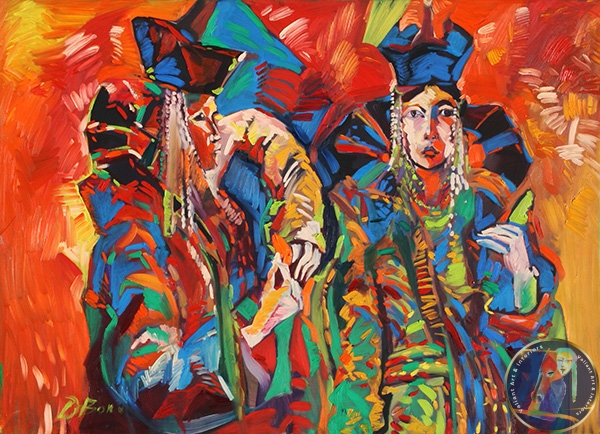
Queens is a striking synthesis of Mongolian heritage and contemporary abstraction. Measuring 70 x 100 cm, this oil-on-canvas work utilizes a landscape orientation to present a series of figures—interpreted as the “Queens” of the title—through a lens that balances figurative recognition with modern, fluid distortion.
Style and Composition
True to Ganbold’s established style, the painting bridges the gap between Modern Contemporary and Figurative Nude art.
The Figures: The central subjects are rendered with a sophisticated use of line and form. While the anatomy is rooted in the “Nude” style, the bodies are often elongated or merged with their surroundings, suggesting a spiritual or historical presence rather than a strictly physical one.
Abstraction: The background and foreground dissolve into layered textures and emotive brushstrokes. There is a sense of “Aphorism in art”—a recurring theme in Ganbold’s solo work—where the visual elements act as a concise, powerful expression of Mongol identity and feminine power.
Color Palette and Technique
The artist employs a rich, tactile application of oil paint. The palette likely draws from the earthy and regal tones associated with traditional Mongolian aesthetics—ochres, deep reds, and celestial blues—reimagined through an Abstract lens. The interplay of light and shadow creates a rhythmic movement across the canvas, guiding the eye between the distinct silhouettes of the queens.
Cultural Context
Created by an artist who came of age during Mongolia’s transition to a democratic society, Queens reflects a “Freedom” of expression (echoing his 2007 solo exhibition). It pays homage to the influential women of Mongolian history, stripping away the literal trappings of royal regalia to focus on the raw, figurative strength and enduring essence of leadership.
Artistic Significance: This piece represents a mature phase of Ganbold’s career, blending the technical discipline seen in his early Beijing and Shanghai exhibitions with the bold, philosophical inquiry of his later solo shows. It remains a definitive example of how contemporary Mongolian artists reinterpret national identity through international artistic movements.