Fighting

Munkhbat Naranpeljee , 2010 , Oil On Canvas

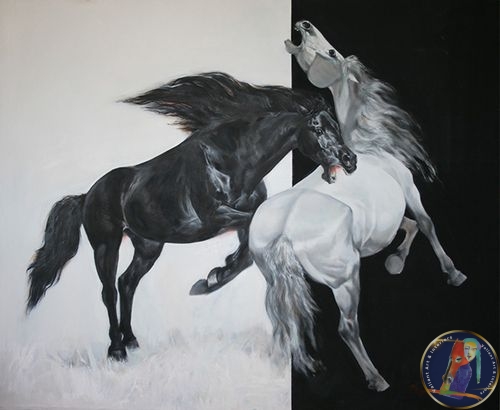
Fighting is a visceral, large-scale oil painting that captures the raw intensity and primal energy of a confrontation between two powerful stallions. Measuring an imposing 150 x 190 cm, the canvas serves as a grand stage for a scene that feels both timeless and cinematic, deeply rooted in the equestrian traditions of the artist’s Mongolian heritage.

Composition and Movement

The composition is dominated by two massive horses locked in a vertical struggle. One horse rears high on its hind legs, its body forming a powerful diagonal line that slices through the frame. The second horse meets this challenge with equal ferocity, its neck arched and muscles tensed.

Naranpeljee utilizes a dynamic, expressionistic brushwork style. The background is not a literal landscape but rather a turbulent atmosphere of swirling earth tones and atmospheric greys, suggesting a cloud of dust kicked up by the violence of the hooves. This abstraction ensures that the viewer’s focus remains entirely on the physical collision of the animals.

Color Palette and Texture

The palette is a sophisticated blend of naturalism and drama:

  • Deep Umbers and Ochres: These define the musculature and skeletal structure of the horses, giving them a heavy, grounded presence.

  • Flutters of White and Crimson: Splashes of lighter tones highlight the sheen of sweat on the hides, the flare of nostrils, and the glint in the eyes, adding a sense of immediate, high-stakes life.

  • Impasto Technique: The artist applies the oil paint with visible thickness in key areas, creating a tactile surface that mimics the rugged texture of horsehair and the grit of the earth.

Theme and Impact

The painting transcends a simple depiction of animals; it is a study of unbridled power and survival. The sheer scale of the 1.9-meter width forces the viewer into the “splash zone” of the conflict, making the sound of neighing and the thundering of hooves almost audible.

The work reflects the spirit of the steppe—where the horse is not merely a tool, but a symbol of freedom, strength, and the relentless cycle of nature. Its inclusion in prestigious global venues like the Carrousel Du Louvre and the International Equestrian Festival underscores its status as a premier example of contemporary equine art.
  • Munkhbat Naranpeljee
  • Calligraphy, Photorealism
  • Oil On Canvas
  • MBT/020
  • 150 x 190cm
  • Mongolian Art Gallery

Add Your Comment

Mongolian Art Gallery © 2025. All Rights Reserved
Privacy Policy / Terms of Use

Fighting is a visceral, large-scale oil painting that captures the raw intensity and primal energy of a confrontation between two powerful stallions. Measuring an imposing 150 x 190 cm, the canvas serves as a grand stage for a scene that feels both timeless and cinematic, deeply rooted in the equestrian traditions of the artist’s Mongolian heritage.

Composition and Movement

The composition is dominated by two massive horses locked in a vertical struggle. One horse rears high on its hind legs, its body forming a powerful diagonal line that slices through the frame. The second horse meets this challenge with equal ferocity, its neck arched and muscles tensed.

Naranpeljee utilizes a dynamic, expressionistic brushwork style. The background is not a literal landscape but rather a turbulent atmosphere of swirling earth tones and atmospheric greys, suggesting a cloud of dust kicked up by the violence of the hooves. This abstraction ensures that the viewer’s focus remains entirely on the physical collision of the animals.

Color Palette and Texture

The palette is a sophisticated blend of naturalism and drama:

  • Deep Umbers and Ochres: These define the musculature and skeletal structure of the horses, giving them a heavy, grounded presence.

  • Flutters of White and Crimson: Splashes of lighter tones highlight the sheen of sweat on the hides, the flare of nostrils, and the glint in the eyes, adding a sense of immediate, high-stakes life.

  • Impasto Technique: The artist applies the oil paint with visible thickness in key areas, creating a tactile surface that mimics the rugged texture of horsehair and the grit of the earth.

Theme and Impact

The painting transcends a simple depiction of animals; it is a study of unbridled power and survival. The sheer scale of the 1.9-meter width forces the viewer into the “splash zone” of the conflict, making the sound of neighing and the thundering of hooves almost audible.

The work reflects the spirit of the steppe—where the horse is not merely a tool, but a symbol of freedom, strength, and the relentless cycle of nature. Its inclusion in prestigious global venues like the Carrousel Du Louvre and the International Equestrian Festival underscores its status as a premier example of contemporary equine art.