
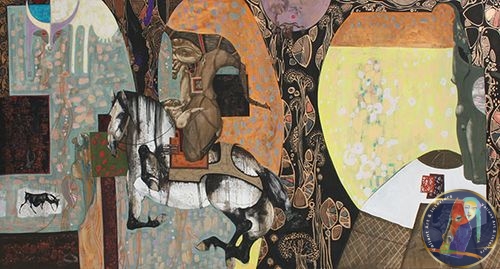
Horseman

Munkhbat Naranpeljee , 2010 , Oil On Canvas

Horseman is a dynamic and evocative oil painting that captures the profound, spiritual connection between a Mongolian rider and his steed. Created in 2010, the work reflects Munkhbat Naranpeljee’s signature ability to blend traditional nomadic motifs with a modern, expressive painterly style.

Composition and Technique

  • The Subject: The painting features a central figure atop a horse, depicted with a sense of fluid motion. Rather than a static portrait, the artist uses sweeping, textured brushstrokes to suggest the wind of the steppe and the rhythmic gait of the animal.

  • Color Palette: The work utilizes a rich, earthy palette dominated by ochres, deep browns, and weathered ambers, punctuated by sudden highlights of crimson or turquoise that denote traditional attire or harness details.

  • Texture: The application of oil paint is thick and gestural. The canvas shows a mastery of light and shadow, where the boundaries between the rider, the horse, and the horizon often blur, symbolizing the unity of the nomad with the natural world.

Artistic Significance

The piece is a testament to the enduring legacy of the Mongolian horse culture. By eschewing strict realism for an impressionistic, almost atmospheric approach, Naranpeljee elevates the horseman from a mere traveler to a timeless icon of freedom and endurance.
  • Munkhbat Naranpeljee
  • Geometric, Minimalist
  • Oil On Canvas
  • MBT/017
  • Contact for Dimensions
  • Mongolian Art Gallery

Add Your Comment

Mongolian Art Gallery © 2025. All Rights Reserved
Privacy Policy / Terms of Use

Horseman is a dynamic and evocative oil painting that captures the profound, spiritual connection between a Mongolian rider and his steed. Created in 2010, the work reflects Munkhbat Naranpeljee’s signature ability to blend traditional nomadic motifs with a modern, expressive painterly style.

Composition and Technique

  • The Subject: The painting features a central figure atop a horse, depicted with a sense of fluid motion. Rather than a static portrait, the artist uses sweeping, textured brushstrokes to suggest the wind of the steppe and the rhythmic gait of the animal.

  • Color Palette: The work utilizes a rich, earthy palette dominated by ochres, deep browns, and weathered ambers, punctuated by sudden highlights of crimson or turquoise that denote traditional attire or harness details.

  • Texture: The application of oil paint is thick and gestural. The canvas shows a mastery of light and shadow, where the boundaries between the rider, the horse, and the horizon often blur, symbolizing the unity of the nomad with the natural world.

Artistic Significance

The piece is a testament to the enduring legacy of the Mongolian horse culture. By eschewing strict realism for an impressionistic, almost atmospheric approach, Naranpeljee elevates the horseman from a mere traveler to a timeless icon of freedom and endurance.