Composition

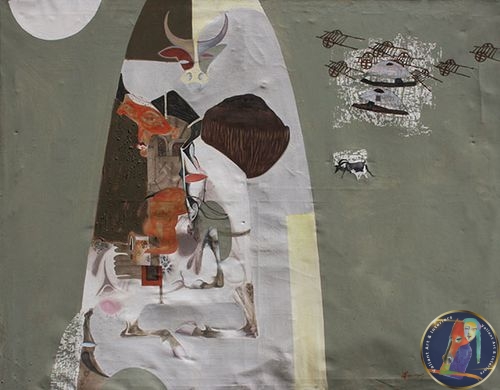
Munkhbat Naranpeljee , 2010 , Oil On Canvas

Composition is a striking example of Munkhbat Naranpeljee’s ability to fuse traditional Mongolian motifs with contemporary semi-abstract techniques. The painting is dominated by a sense of fluid motion and monumentality, characteristic of the artist’s fascination with the horse—a central symbol of nomadic culture.

Detailed Description

The artwork features a group of horses rendered with a blend of anatomical precision and expressive, sweeping brushstrokes. Rather than a static portrait, the “composition” refers to the rhythmic arrangement of the animals’ bodies, which seem to emerge from and recede into a textured background.

  • Color Palette: The artist utilizes a sophisticated palette of earth tones—ochres, deep umbers, and burnt sienna—interspersed with cool grays and flashes of ethereal white. This creates a timeless, atmospheric quality, as if the scene is viewed through the haze of the Mongolian steppe or the dust of a galloping herd.

  • Technique: Naranpeljee employs heavy impasto and visible palette knife work to create physical depth. The outlines of the horses are often blurred, emphasizing their power and speed over fine detail. This technique allows the viewer to feel the kinetic energy of the subjects.

  • Symbolism: The large scale ($127 \times 158$ cm) allows the viewer to be fully immersed in the scene. The horses are not merely animals but represent the spirit of freedom and the historical pulse of Central Asia.


Historical Significance & Exhibition Context

Created in 2010, this piece served as a major ambassador for Mongolian contemporary art on the global stage. Its inclusion in high-profile international circuits highlights its universal appeal:

  • Art Monaco & Carrousel Du Louvre: These exhibitions placed the work within the context of elite European contemporary art, showcasing the artist’s mastery of the oil medium.

  • International Equestrian Festival (Kentucky, USA): Given Lexington’s status as the “Horse Capital of the World,” this exhibition emphasized the painting’s thematic resonance with equestrian enthusiasts and its ability to capture the soul of the horse beyond cultural boundaries.
  • Munkhbat Naranpeljee
  • Abstract, Photorealism
  • Oil On Canvas
  • MBT/009
  • 127 x 158cm
  • Mongolian Art Gallery

Add Your Comment

Mongolian Art Gallery © 2025. All Rights Reserved
Privacy Policy / Terms of Use

Composition is a striking example of Munkhbat Naranpeljee’s ability to fuse traditional Mongolian motifs with contemporary semi-abstract techniques. The painting is dominated by a sense of fluid motion and monumentality, characteristic of the artist’s fascination with the horse—a central symbol of nomadic culture.

Detailed Description

The artwork features a group of horses rendered with a blend of anatomical precision and expressive, sweeping brushstrokes. Rather than a static portrait, the “composition” refers to the rhythmic arrangement of the animals’ bodies, which seem to emerge from and recede into a textured background.

  • Color Palette: The artist utilizes a sophisticated palette of earth tones—ochres, deep umbers, and burnt sienna—interspersed with cool grays and flashes of ethereal white. This creates a timeless, atmospheric quality, as if the scene is viewed through the haze of the Mongolian steppe or the dust of a galloping herd.

  • Technique: Naranpeljee employs heavy impasto and visible palette knife work to create physical depth. The outlines of the horses are often blurred, emphasizing their power and speed over fine detail. This technique allows the viewer to feel the kinetic energy of the subjects.

  • Symbolism: The large scale ($127 \times 158$ cm) allows the viewer to be fully immersed in the scene. The horses are not merely animals but represent the spirit of freedom and the historical pulse of Central Asia.


Historical Significance & Exhibition Context

Created in 2010, this piece served as a major ambassador for Mongolian contemporary art on the global stage. Its inclusion in high-profile international circuits highlights its universal appeal:

  • Art Monaco & Carrousel Du Louvre: These exhibitions placed the work within the context of elite European contemporary art, showcasing the artist’s mastery of the oil medium.

  • International Equestrian Festival (Kentucky, USA): Given Lexington’s status as the “Horse Capital of the World,” this exhibition emphasized the painting’s thematic resonance with equestrian enthusiasts and its ability to capture the soul of the horse beyond cultural boundaries.