National Instrument

Munkhbat Naranpeljee , 2009 , Oil On Canvas

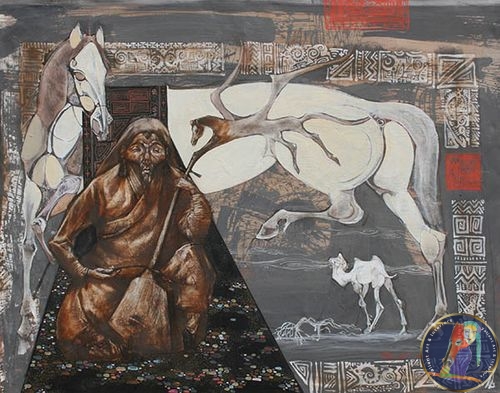
National Instrument is a compelling oil on canvas work by Munkhbat Naranpeljee, executed in 2009. Measuring 80 x 100cm, the painting is a masterful exploration of cultural heritage rendered through a lens of contemporary realism.

Composition and Subject Matter

The painting centers on a meticulous depiction of traditional instrumentation, likely a Morin Khuur (horsehead fiddle), positioned with a sense of quiet authority. The artist utilizes a balanced, yet dynamic composition that emphasizes the organic curves of the instrument’s neck against the structural integrity of its body. The work goes beyond a mere still life, imbuing the object with a portrait-like presence that suggests a deep narrative history.

Technique and Color Palette

Naranpeljee’s technique is characterized by a sophisticated use of photorealism, where textures are rendered with tactile precision.

  • Surface Texture: The artist captures the subtle grain of the wood, the soft sheen of the varnish, and the tension of the strings. There is a perceptible depth to the paint layers, creating a realistic play of light and shadow.

  • Color Profile: The palette is dominated by rich, earthy ochres, deep ambers, and warm siennas, contrasted against cooler, neutral background tones. This contrast ensures the “National Instrument” remains the focal point, radiating a soft, ambient glow.

  • Lighting: A focused, directional light source creates soft gradients and sharp highlights, defining the three-dimensional volume of the instrument and casting gentle shadows that anchor it within the space.

Artistic Significance

Created during a pivotal period in the artist’s career, this piece serves as a bridge between nomadic tradition and modern fine art. Its inclusion in prestigious international venues—such as Art Monaco, the Carrousel Du Louvre, and the International Equestrian Festival—underscores its global appeal and its role in bringing Mongolian realism to the forefront of the contemporary art scene.

The painting is not just a study of form, but an evocative tribute to the “voice” of a nation, captured through disciplined brushwork and a profound respect for the subject’s cultural weight.
  • Munkhbat Naranpeljee
  • Calligraphy, Figurative
  • Oil On Canvas
  • MBT/005
  • 80 x 100cm
  • Mongolian Art Gallery

Add Your Comment

Mongolian Art Gallery © 2025. All Rights Reserved
Privacy Policy / Terms of Use

National Instrument is a compelling oil on canvas work by Munkhbat Naranpeljee, executed in 2009. Measuring 80 x 100cm, the painting is a masterful exploration of cultural heritage rendered through a lens of contemporary realism.

Composition and Subject Matter

The painting centers on a meticulous depiction of traditional instrumentation, likely a Morin Khuur (horsehead fiddle), positioned with a sense of quiet authority. The artist utilizes a balanced, yet dynamic composition that emphasizes the organic curves of the instrument’s neck against the structural integrity of its body. The work goes beyond a mere still life, imbuing the object with a portrait-like presence that suggests a deep narrative history.

Technique and Color Palette

Naranpeljee’s technique is characterized by a sophisticated use of photorealism, where textures are rendered with tactile precision.

  • Surface Texture: The artist captures the subtle grain of the wood, the soft sheen of the varnish, and the tension of the strings. There is a perceptible depth to the paint layers, creating a realistic play of light and shadow.

  • Color Profile: The palette is dominated by rich, earthy ochres, deep ambers, and warm siennas, contrasted against cooler, neutral background tones. This contrast ensures the “National Instrument” remains the focal point, radiating a soft, ambient glow.

  • Lighting: A focused, directional light source creates soft gradients and sharp highlights, defining the three-dimensional volume of the instrument and casting gentle shadows that anchor it within the space.

Artistic Significance

Created during a pivotal period in the artist’s career, this piece serves as a bridge between nomadic tradition and modern fine art. Its inclusion in prestigious international venues—such as Art Monaco, the Carrousel Du Louvre, and the International Equestrian Festival—underscores its global appeal and its role in bringing Mongolian realism to the forefront of the contemporary art scene.

The painting is not just a study of form, but an evocative tribute to the “voice” of a nation, captured through disciplined brushwork and a profound respect for the subject’s cultural weight.