
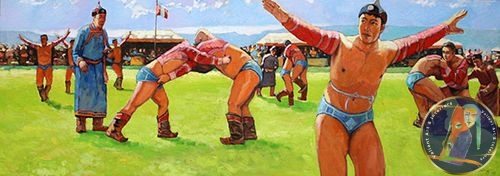
Mongolian Wrestling

Otgonbayar Khisheg , 2008 , Oil On Canvas

This expansive oil on canvas, measuring 60 x 180cm, serves as a panoramic tribute to one of Mongolia’s “Three Manly Games.” Painted by Otgonbayar Khisheg when he was just 22 years old, the work captures the raw physicality and cultural sanctity of Bökh (traditional wrestling) through a lens of meticulous realism.


Composition and Scale

The painting’s unusual horizontal aspect ratio (1:3) mimics the vastness of the Mongolian steppe. This wide-angle perspective allows Khisheg to move beyond a simple portrait of two athletes, instead creating a narrative sequence that feels cinematic. The sprawling canvas emphasizes the communal nature of the event, grounding the figures within a limitless horizon that suggests the timelessness of the tradition.

Subject Matter and Realism

The central focus is the figurative depiction of the wrestlers. Khisheg utilizes his mastery of Realism to render the human form with anatomical precision. You can almost feel the tension in the strained muscles and the tactical positioning of the bodies.

The artist pays significant attention to the traditional attire, including:

  • The Zodog: The tight-fitting, long-sleeved open-chested vest.

  • The Shuudag: The small, tight-fitting briefs that allow for maximum mobility.

  • The Gutal: Traditional heavy leather boots.

The texture of the heavy silk and leather contrasts against the softness of the skin, showcasing Khisheg’s technical range in oil media.

Style and Atmosphere

While the figures are central, the Nature and Portrait styles of the artist converge in the background. The landscape is not merely a backdrop but a character itself—rendered with earthy tones and soft light that evoke the high-altitude atmosphere of Ulaanbaatar’s surrounding plains.

The lighting is naturalistic, casting subtle shadows that define the musculature of the wrestlers and give the scene a sculptural, three-dimensional quality. There is a sense of quiet intensity; despite the violence of the sport, the painting exudes a disciplined, respectful energy.


Historical Significance

Created in 2008, the same year it was exhibited at the Beijing International Art Expo, this piece represents a pivotal moment in Khisheg’s early career. It stands as a bridge between classical Mongolian heritage and contemporary figurative realism, cementing his reputation for capturing the soul of Mongolian identity on a grand, international scale.
  • Otgonbayar Khisheg
  • Figurative, Modern/Minimalist
  • Oil On Canvas
  • OTB78/009
  • 60 x 180cm
  • Mongolian Art Gallery

Add Your Comment

Mongolian Art Gallery © 2025. All Rights Reserved
Privacy Policy / Terms of Use

This expansive oil on canvas, measuring 60 x 180cm, serves as a panoramic tribute to one of Mongolia’s “Three Manly Games.” Painted by Otgonbayar Khisheg when he was just 22 years old, the work captures the raw physicality and cultural sanctity of Bökh (traditional wrestling) through a lens of meticulous realism.


Composition and Scale

The painting’s unusual horizontal aspect ratio (1:3) mimics the vastness of the Mongolian steppe. This wide-angle perspective allows Khisheg to move beyond a simple portrait of two athletes, instead creating a narrative sequence that feels cinematic. The sprawling canvas emphasizes the communal nature of the event, grounding the figures within a limitless horizon that suggests the timelessness of the tradition.

Subject Matter and Realism

The central focus is the figurative depiction of the wrestlers. Khisheg utilizes his mastery of Realism to render the human form with anatomical precision. You can almost feel the tension in the strained muscles and the tactical positioning of the bodies.

The artist pays significant attention to the traditional attire, including:

  • The Zodog: The tight-fitting, long-sleeved open-chested vest.

  • The Shuudag: The small, tight-fitting briefs that allow for maximum mobility.

  • The Gutal: Traditional heavy leather boots.

The texture of the heavy silk and leather contrasts against the softness of the skin, showcasing Khisheg’s technical range in oil media.

Style and Atmosphere

While the figures are central, the Nature and Portrait styles of the artist converge in the background. The landscape is not merely a backdrop but a character itself—rendered with earthy tones and soft light that evoke the high-altitude atmosphere of Ulaanbaatar’s surrounding plains.

The lighting is naturalistic, casting subtle shadows that define the musculature of the wrestlers and give the scene a sculptural, three-dimensional quality. There is a sense of quiet intensity; despite the violence of the sport, the painting exudes a disciplined, respectful energy.


Historical Significance

Created in 2008, the same year it was exhibited at the Beijing International Art Expo, this piece represents a pivotal moment in Khisheg’s early career. It stands as a bridge between classical Mongolian heritage and contemporary figurative realism, cementing his reputation for capturing the soul of Mongolian identity on a grand, international scale.